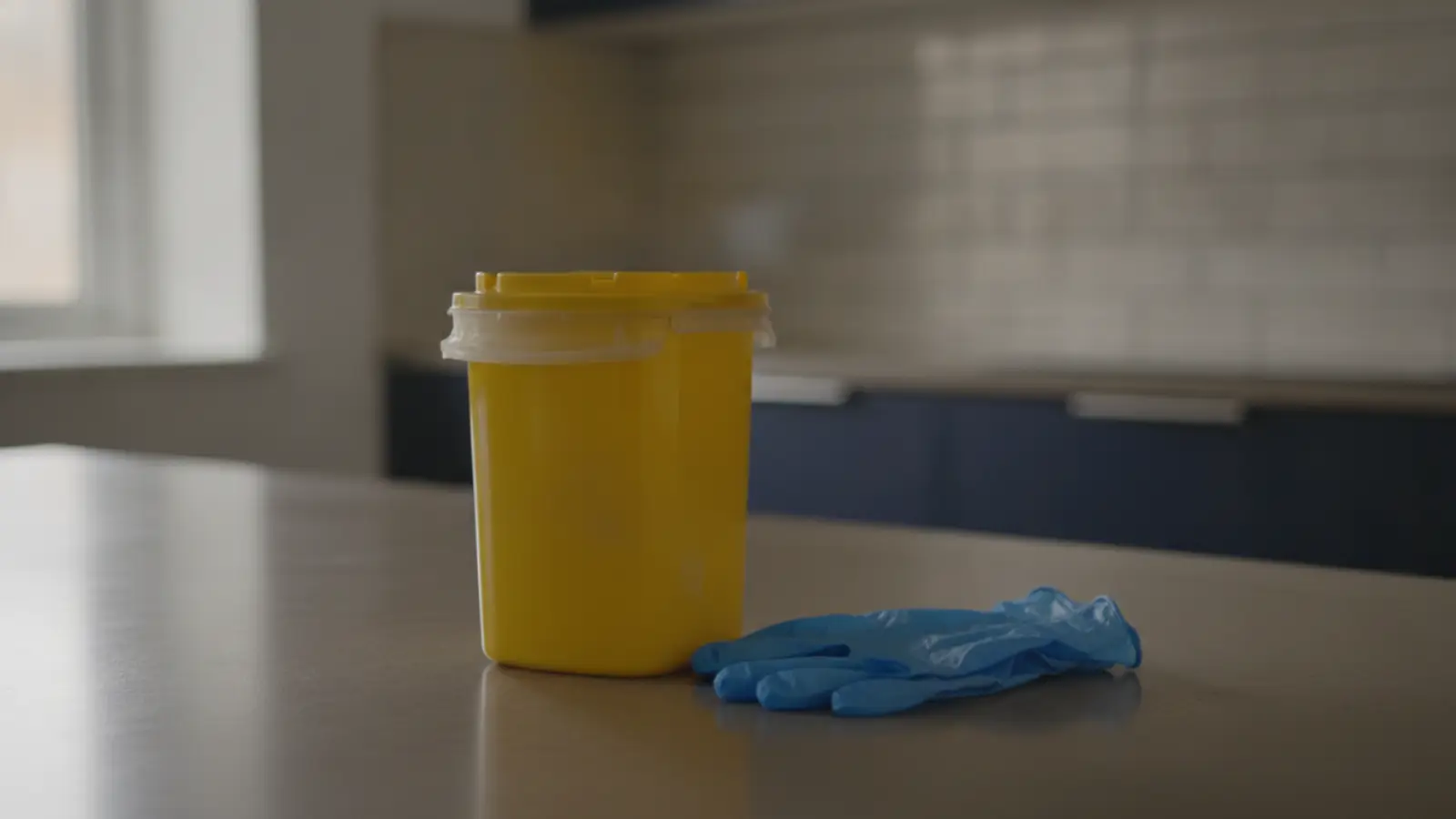

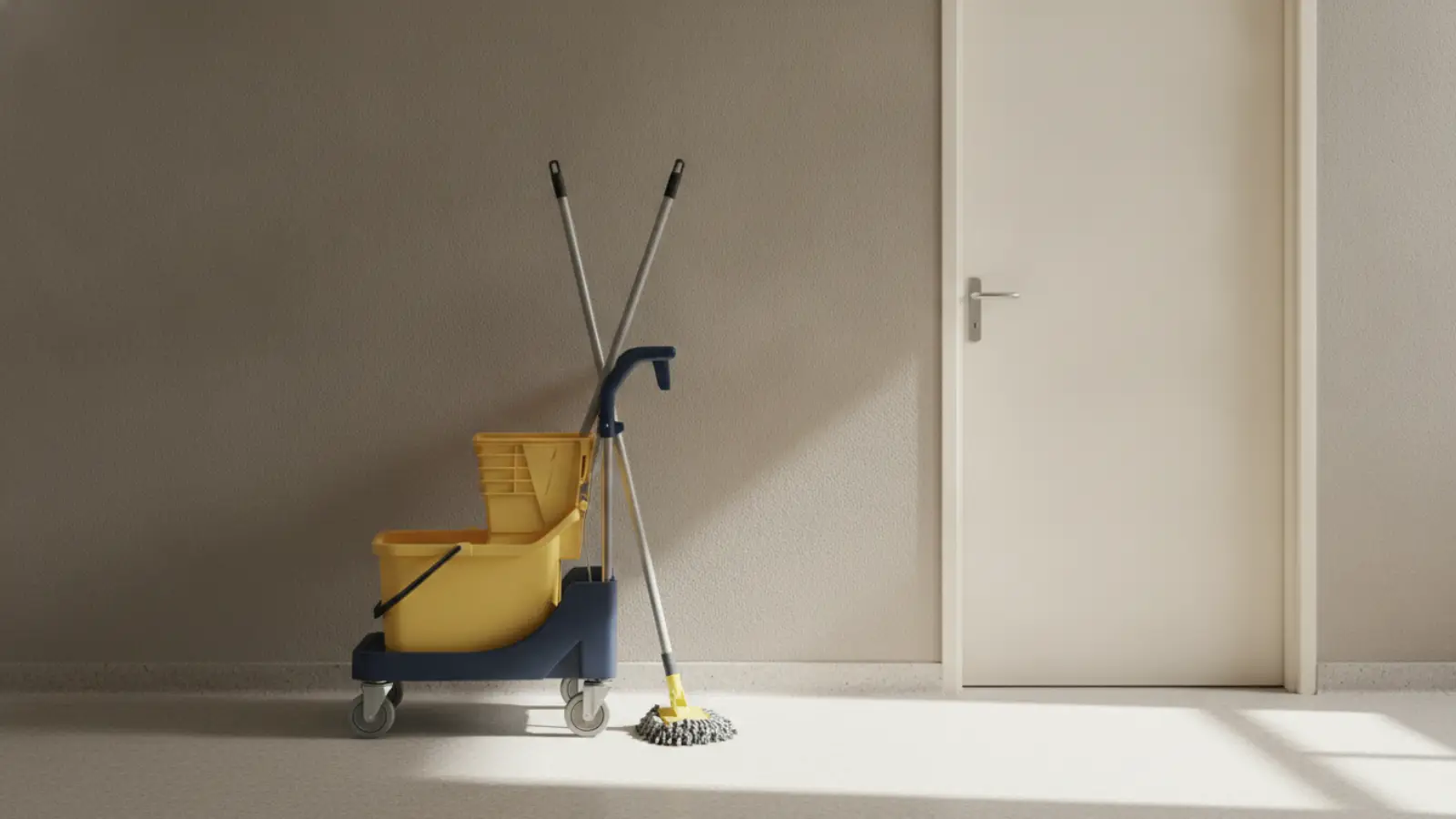
It is the obvious thing to do. There has been an accident, there is blood on the floor, the shop needs to open, and you have a cleaner on shift. Somebody fetches a mop.
That decision is the one most likely to cost the business money, and almost nobody making it knows why.
The rule, and what it actually says
Federal workplace safety regulations cover any employer whose employees can reasonably be anticipated to come into contact with blood or other potentially infectious materials as part of their job duties. Crucially, the scope explicitly includes cleaning up and disposing of the waste generated during an incident.
In plain terms: the moment you direct an employee to clean up blood, cleaning up blood is part of their job duties, and the rule applies to you. It does not matter that it happened once, that the spill was small, or that they volunteered.
What the rule then requires of you
Not a form. A program, and one that was supposed to exist before the incident:
- A written plan for handling exposure. Reviewed and updated, naming the tasks with exposure risk and how each is controlled.
- Training. Provided before the employee is put at risk, and repeated annually.
- Protective equipment. Supplied, maintained and replaced by you at no cost to the employee.
- Hepatitis B vaccination. Offered at no cost, and a signed declination on file if it is refused.
- Record-keeping. Training records, and a confidential medical record for anyone exposed.
- An exposure incident procedure. What happens if a needle goes through a glove, including follow-up and evaluation.
The uncomfortable part is the sequence. These are obligations you were meant to have discharged BEFORE the employee touched anything. Meeting them after the fact is not possible — the training cannot be retroactive and the vaccination cannot be offered in the past.
What it is really costing you
The regulatory exposure is the visible cost. Three others are usually larger:
- A worker who is exposed becomes a workers' compensation claim, and one that can run for months of testing and follow-up before anybody knows the outcome.
- That employee had no way to give meaningful consent — they were asked by their manager while everyone was upset. That is what makes it a liability rather than a favor.
- It rarely works anyway. Household equipment spreads the contamination it does not absorb, and porous flooring keeps what a mop cannot reach — so the area looks clean and is not.
What to do instead
Isolate the area and leave it. A roped-off section of floor costs you an afternoon; an exposure incident costs considerably more. Then call somebody whose employees were trained, vaccinated and equipped for this before today — because for them it is not an unplanned exposure, it is Tuesday.
If there has been a death rather than an injury, do not clean at all until investigators have released the scene. Our post on the first six hours after a death at a business covers that sequence.
Two things we will not tell you
We will not tell you we are OSHA-certified, because no such certification exists for a company — the regulations bind employers, and any firm claiming a badge for them is describing something that is not real. What we can tell you is that our own people are trained and equipped for this work, and that we document what was done.
We also will not tell you that every drop of blood needs a professional. A small spill from a known person on a hard sealed surface is a reasonable thing to handle in-house — with gloves, and a disinfectant left wet on the surface for the number of minutes stated on its label. The line is unknown sources, porous materials, sharps, and anything you would describe as more than a spill.
The work itself: Biohazard cleanup.