
The immediate steps after a death on commercial premises are the same wherever it happens — they are covered in our post on the first six hours. What changes by sector is who else is in the building, who has to be notified, and what the space costs you while it is out of use.
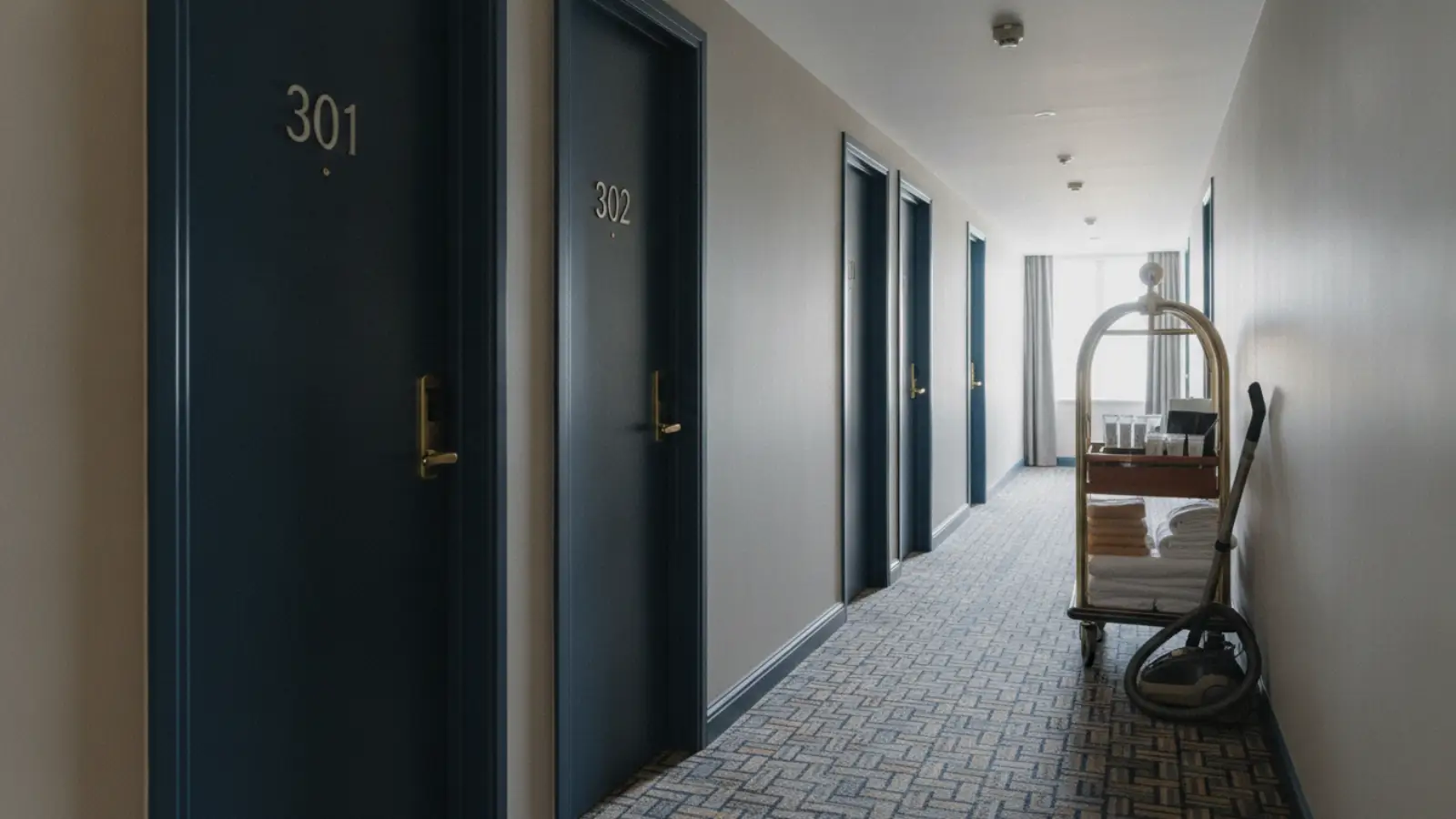
Hotels
The room is revenue, and the instinct is to get it back into inventory quickly. That instinct is the problem, because a room turned around too fast is the one that generates a complaint months later when a guest reports a smell.
- Block the room and the two either side until the extent is known. Odor travels through shared extract ventilation before it is detectable in the corridor.
- Housekeeping does not touch it. This is the single most likely place for a business to hand blood to an employee out of habit.
- Soft furnishings are the issue: mattress, base, headboard, curtains, carpet and carpet padding all absorb. A room that looks fine after a deep clean is not the same as a room that was remediated.
- Keep the written record. If a guest ever raises it, that document is your answer.
- Guests who saw emergency services will talk. Staff should have one agreed sentence and no more.
Care homes and assisted living
Deaths are expected here in a way they are not elsewhere, which is precisely why an unexpected one is handled badly — the routine takes over and the routine was not designed for it.
- An expected death followed by ordinary cleaning is one thing. An unattended death, a suicide, or a death discovered late is a different job and the usual process does not cover it.
- Your own staff are not the right people for it, and the duty you owe them is stronger here than almost anywhere, because they will volunteer.
- Other residents will notice, and some will be distressed by activity they cannot interpret. Out-of-hours work is worth more than usual.
- Your regulator's notification requirements are separate from anything on this page and are not waived by the cleanup being handled.
- If the death is being investigated, the room stays untouched until the police release it — however badly you need the space back.
Offices and workplaces
The building is usually fine within a day. The people are the longer job.
- A work-related death must be reported to the federal workplace safety regulator within eight hours, and the scene must not be disturbed while it is being investigated.
- Do not put facilities or cleaning staff on it. That converts a bad day into a compliance problem, and the exposure is theirs.
- Tell people the same day, in plain terms, and say when the area will be back in use. Silence is filled with something worse.
- Say the area was professionally decontaminated rather than cleaned. Staff hear the difference and it is the difference.
- Consider whether the desk, room or machine goes back into use at all in its current form. Sometimes the right answer is to change the layout.
Warehouses, plants and sites
Machinery, grating, drainage and porous concrete all hold contamination in places a visual check will not reach. Production pressure is intense and it is the wrong master here — the area stays closed until the work is finished and the investigation has released it.
Where the death was an accident rather than a homicide, suicide or advanced decomposition, note that Georgia's trauma scene registration does not govern the work. The waste rules and the contractor's own training do. A vendor telling you their state license covers it is overstating what that license is.
The question every sector asks
How fast can we reopen. The honest answer is that arrival speed is rarely the constraint — the constraint is when investigators release the scene, and then how far contamination actually spread, which nobody knows until the work starts.
What you can do in advance is have the assessment booked and the crew ready for the moment release comes, so that none of the waiting is yours to spend twice.
The work itself: Biohazard cleanup.