
If you have found drug paraphernalia in a rental, inherited a property, or are taking on a unit with a history, you have probably read something frightening. Most of it is overstated, and we would rather tell you that than sell you a job you may not need.
What the risk is not
Public health authorities have been consistent on this: incidental skin contact with fentanyl residue on a surface is not a realistic route to overdose. The dramatic accounts of people collapsing from brushing a doorframe are not supported by the toxicology, and the agencies that investigate these incidents have said so repeatedly.
We say that plainly because the alternative is a scare, and a scare is what most pages on this subject are. If a company's first move is to tell you the property is deadly, treat the rest of what they say with the same skepticism.
What the genuine concerns are
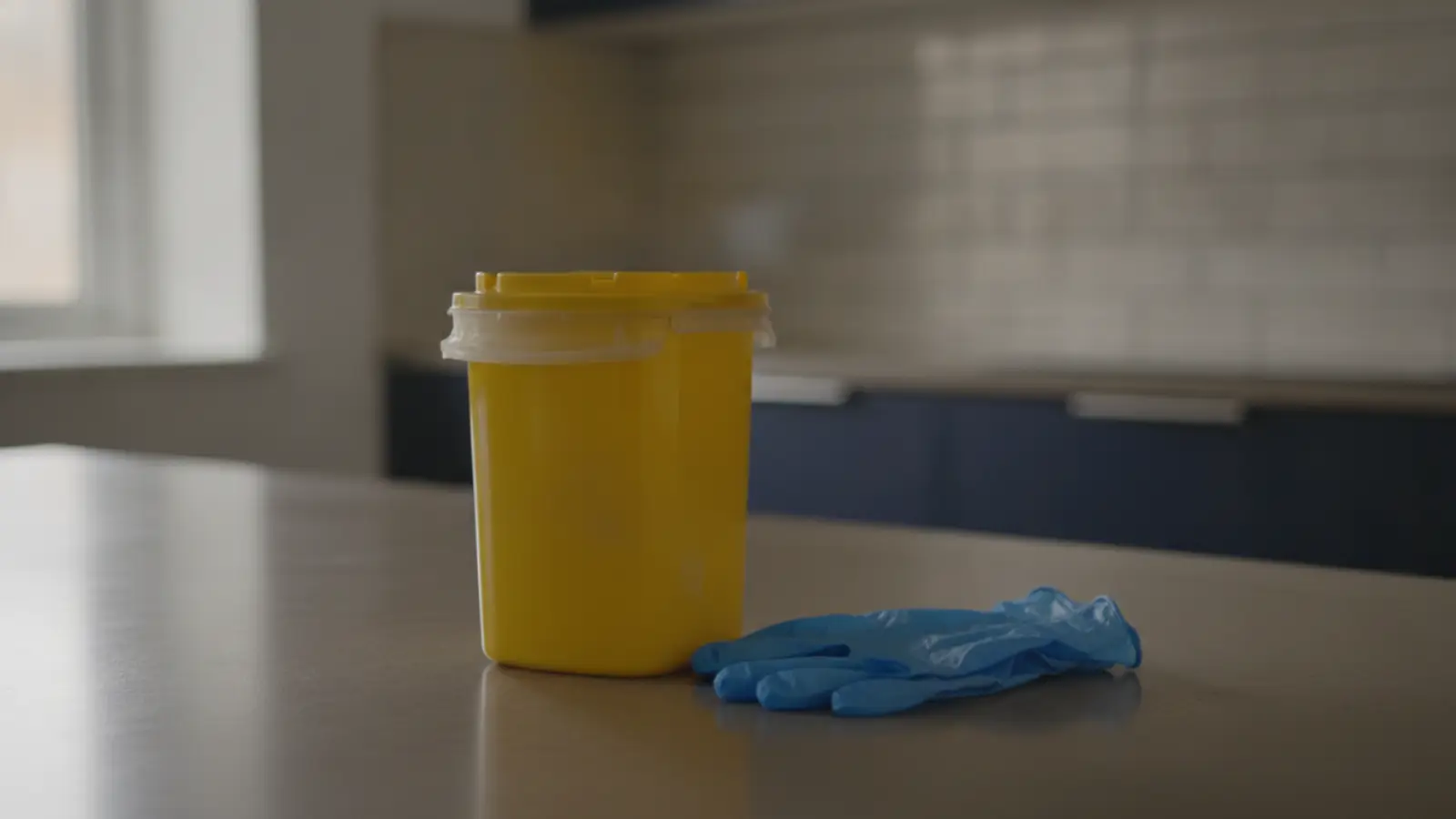
- Needles and sharps. This is the real hazard, and it is a puncture risk rather than an absorption one. Do not collect them by hand, and do not send an employee to do it.
- Children and pets, who put things in their mouths and who explore places adults do not check.
- Loose powder or visible residue in quantity, which is a different proposition from a trace on a countertop.
- Manufacturing rather than use. A property used to produce drugs is a genuinely different problem involving chemicals and structural contamination, and it is not what this page is about.
- The rest of the property's condition, which after prolonged drug use is frequently the actual reason it needs professional work.
Why a landlord might still want it decontaminated
Not because the walls are dangerous. Because of what you can say afterwards.
If you re-rent a unit with a known history and a tenant later raises it, the useful answer is a written record that the property was professionally decontaminated, listing what was removed and treated. Without one you are relying on your word. That is a habitability and liability argument, and it is the honest reason to do the work.
What decontamination actually involves
- Sharps located and removed properly, including the places people hide them, which is the part most worth paying for.
- Surfaces cleaned rather than wiped, with attention to the ones people forget — switches, handles, toilet tank lids, the undersides of furniture.
- Porous items that held residue removed, because they cannot be reliably cleaned.
- Ventilation and filters checked where there is any question of manufacturing.
- A written record at the end.
What we will not do
We will not certify a property as free of drug residue. There is no residential standard to test against, and any certificate offered to you is a document somebody designed rather than a measurement.
We will also tell you when the honest answer is a thorough ordinary clean and a sharps sweep, rather than a full decontamination. That happens more often than the industry's marketing suggests.
On the licensing, to be exact
Georgia's trauma scene registration covers homicides, suicides and deaths with advanced decomposition. Drug residue with no death is not within that definition, so that license is not the credential for this work — the waste handling rules and the training of the people doing it are. Anyone citing a state trauma license at you for a drug clean is stretching it.
The work itself: Biohazard cleanup.