
Most of what is written about biohazard cleanup assumes somebody has died. Plenty of it does not involve a death at all, and the people dealing with those situations often have no idea who to ring — or assume a company like ours would not be interested.
Sewage, and why it is not a mopping job
A sewage backup is a biohazard, not a mess. It carries bacteria, viruses and parasites, and it behaves exactly like other contamination: it goes into porous material and stays there while the surface dries and looks fine.
- Carpet, carpet padding and anything upholstered that was touched comes out. It cannot be reliably disinfected.
- Drywall draws liquid upwards from the floor like a wick. The affected section is usually cut back rather than dried out.
- Drying alone is not decontamination. A dry contaminated floor is still a contaminated floor.
- The water that receded left what was in it behind.
For a large backup, water damage restoration and decontamination are two different jobs and you may need both. Be clear which one you are buying — a firm that dries a building is not necessarily decontaminating it.
Needles and sharps
Found in a stairwell, a garden, a rental after a tenant leaves, a public toilet on a commercial site. The rule is simple and it is not squeamishness:
- Do not pick them up. Not with gloves, not with tongs, not into a bottle. A needlestick from an unknown source starts a course of testing and follow-up that runs for months.
- Do not send an employee. If you direct a member of staff to collect sharps, that becomes part of their job duties and your obligations under the federal bloodborne pathogens rule follow immediately.
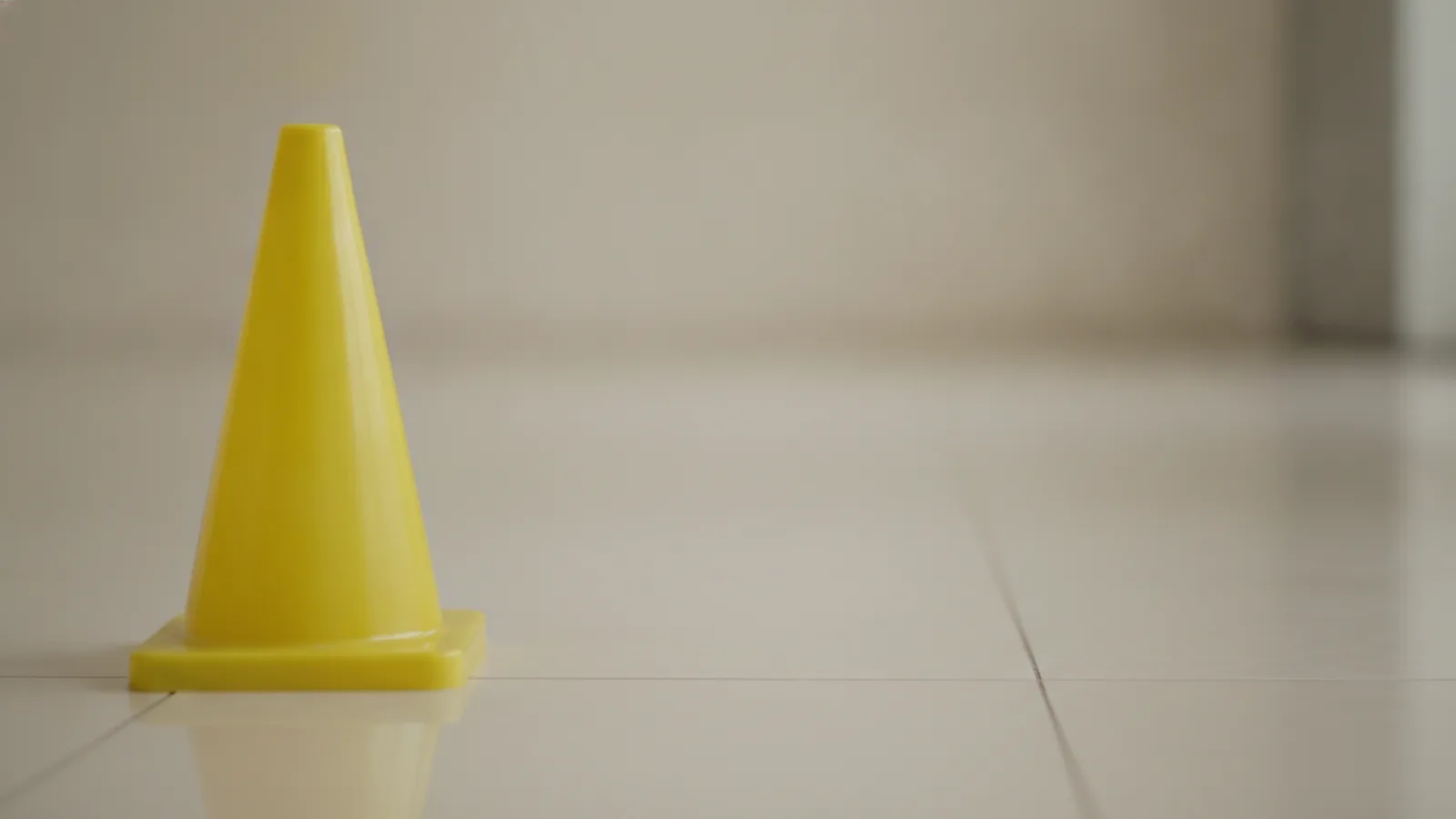
- Mark the area and keep people away. A cone and twenty minutes of waiting is the cheapest option available to you.
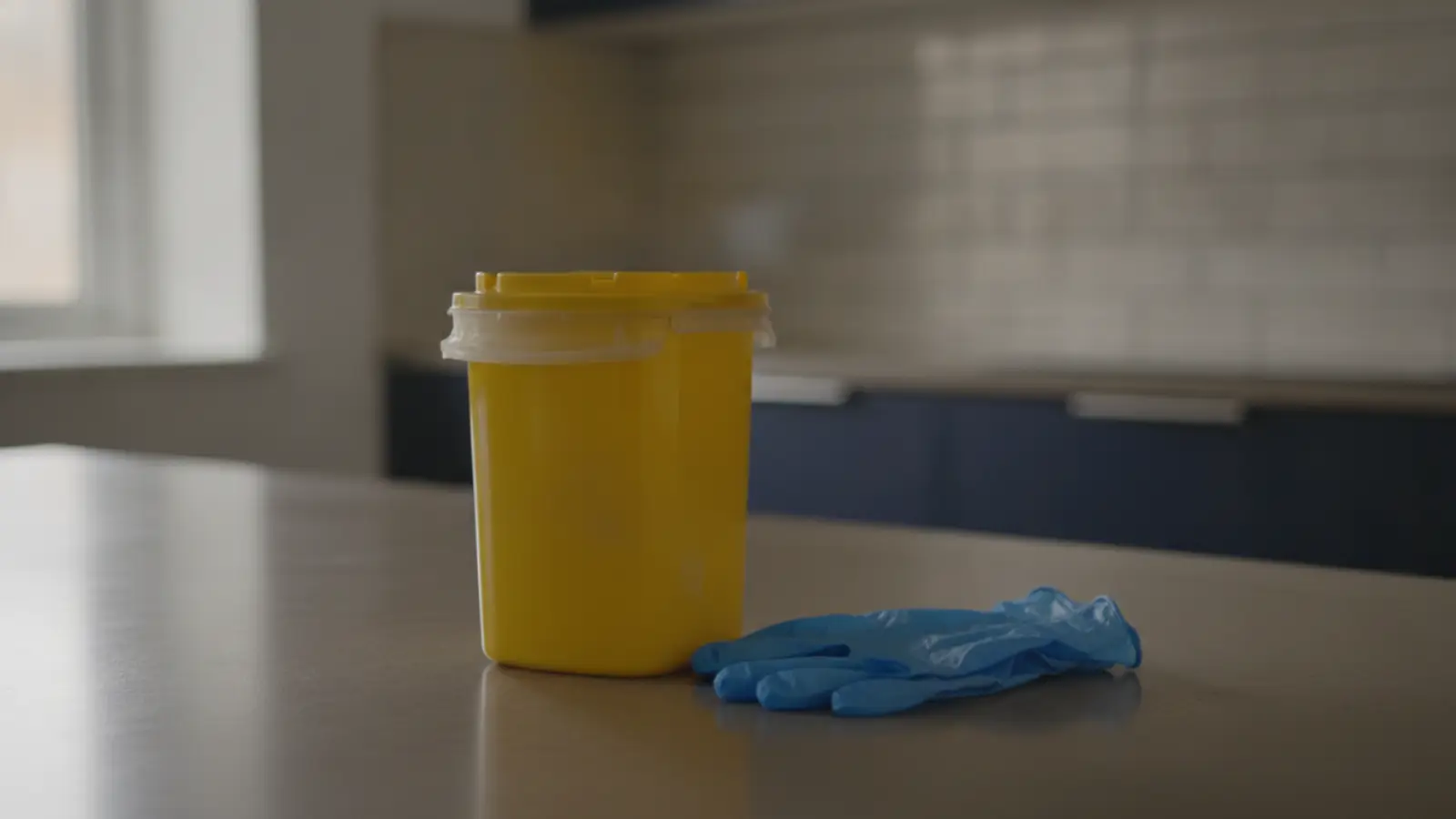
- They are regulated waste. Sharps go into rigid containers and to a licensed facility. Not a trash can, not a dumpster.
Decontaminating after illness
A room used by someone with a serious infection, a care setting after an outbreak, a vehicle or a workspace that needs to be handed back with confidence. This is ordinary, unglamorous work and it is worth doing properly.
The thing to ask is what the treatment actually claims. A disinfectant is effective against particular organisms, for a particular contact time, on a particular surface. Anyone promising a room is “sanitized” without naming any of those three is selling a word.
When you can handle it yourself
We would rather draw this line than pretend everything needs a call. A small quantity, from a known source, on a hard sealed surface, is reasonable to deal with in-house: disposable gloves, cover rather than wipe, a disinfectant rated for the job left wet on the surface for the minutes its label states, and the waste bagged separately.
Call somebody when the source is unknown, when it has reached anything porous, when sharps are involved, when the area is a workplace, or when the volume is beyond a spill.
One thing to be clear about on the licensing
Georgia's trauma scene registration covers homicides, suicides and deaths with advanced decomposition. None of the situations on this page fall inside that definition, so that license is not the relevant credential for them and we will not wave it at you as though it were.
What governs this work is the waste handling and disposal rules, and whether the people doing it were trained and equipped beforehand. Those are the right questions to ask, of us or of anyone else.
The work itself: Biohazard cleanup.