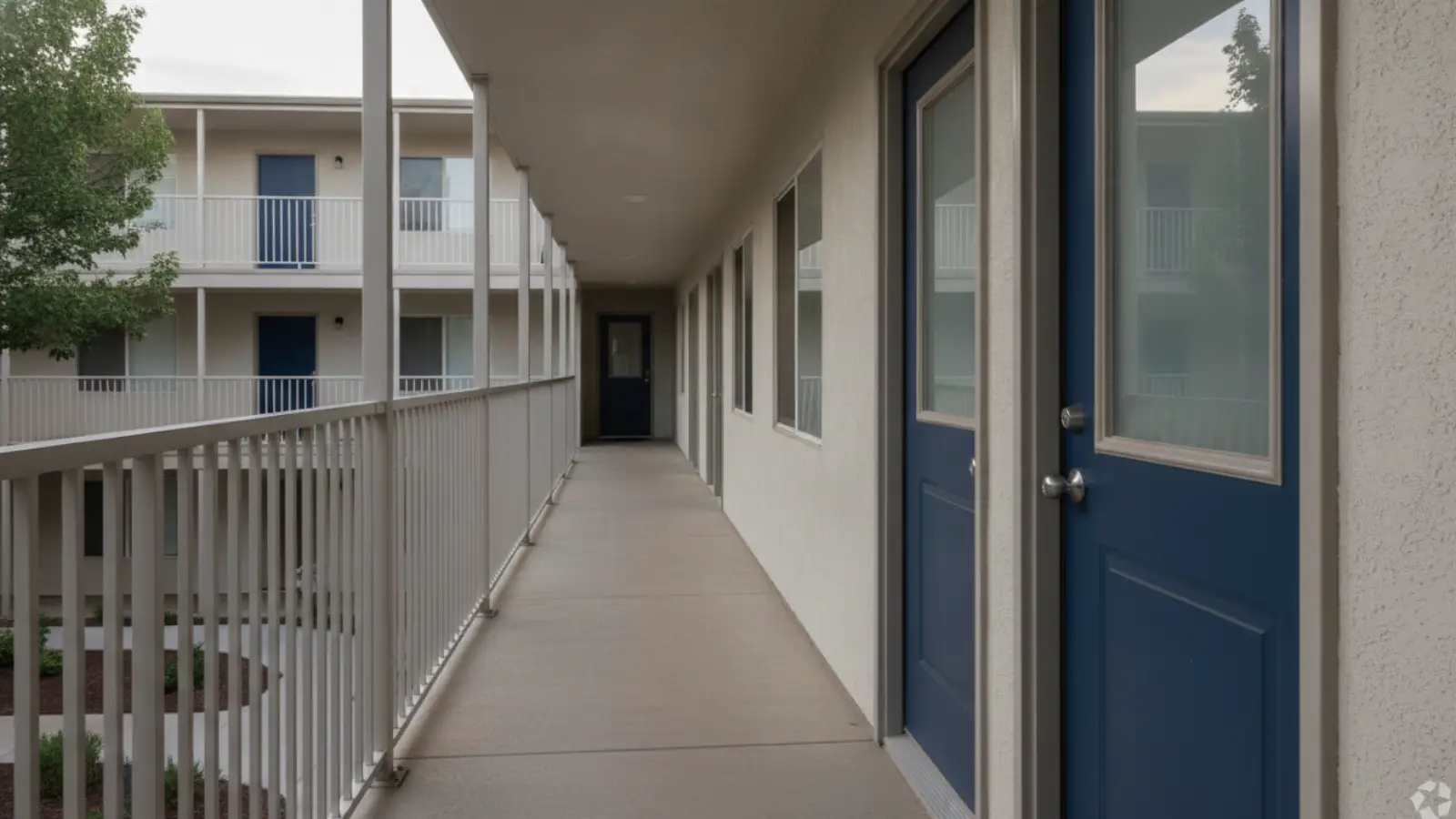

If you own or manage rental property long enough, this will happen, and there is very little written about it that applies to Georgia.
A tenant has died in a unit. Somebody has to arrange the cleanup, somebody has to pay for it, and there is a family involved who are having the worst week of their lives. Here is what Georgia law does say, what it conspicuously does not say, and how to handle the part the statutes leave open.
The honest headline: the law does not answer your main question
We went looking for the rule on who pays for cleanup after a tenant dies. It is not there. Georgia's landlord-tenant chapter does not address it, and the Department of Community Affairs' Landlord-Tenant Handbook — the state's own plain-English guide, well over a thousand lines — does not deal with death, the deceased tenant's estate, or cleanup cost allocation at all.
Anyone who tells you Georgia law clearly puts this on the estate, or clearly puts it on the landlord, is telling you something the statutes do not say. What exists instead is a set of adjacent rules that constrain how you go about it — and they have real teeth.
Start here: the deposit rules are strict, and the penalty is severe
Whatever you conclude about who ultimately pays, the security deposit process is governed tightly, and the deadlines do not pause for a death.
- Three business days to inspect. After the tenancy ends and the unit is vacant, the landlord must inspect and compile a comprehensive list of damage with an estimated dollar value for each item.
- Wear and tear is not chargeable. No deposit may be retained for ordinary wear and tear, provided there was no negligence, carelessness, accident, or abuse of the premises by the tenant. A landlord may retain for actual damages caused by the tenant's breach — and must attempt to mitigate those damages.
- Missing the deadlines forfeits everything. Failure to comply works a forfeiture of all the landlord's rights to withhold any part of the deposit, or to bring an action against the tenant for damages.
- Getting it wrong is expensive. A landlord who withholds improperly can be liable for three times the sum wrongfully withheld, plus attorney's fees.
Read those together and the practical advice writes itself: document meticulously, itemize with real figures rather than estimates you cannot support, and get written advice before withholding anything in a situation this unusual. Treble damages plus fees is a bad outcome in a case you were probably going to feel awkward about anyway.
What the law does clearly require of you
Two obligations are not ambiguous. The first is habitability: the landlord shall keep the premises in repair, and since the Safe at Home Act took effect for leases entered or renewed on or after July 1, 2024, every residential lease is deemed to include a provision that the premises are fit for human habitation. A unit that has not been properly decontaminated does not meet that standard, whatever is eventually decided about the invoice.
The second is who may do the work. Georgia requires anyone performing trauma scene cleanup commercially to be registered with the Secretary of State — and an unregistered operator is barred from recovering the cost from a property owner. That last point is squarely in your interest: an unregistered contractor's invoice is a bill on very weak legal footing, and it is not a document you want at the center of a deposit dispute or an insurance claim.
Two things that are widely repeated and are not true in Georgia
Both of these came up while researching this article, and both would have led a landlord badly astray.
- “The lease automatically terminates when the tenant dies.” We could not find any general Georgia statute providing that. The only death-based termination in the landlord-tenant chapter concerns service members. What happens to the tenancy depends on the lease itself and on the estate, and it is a question for an attorney, not for a rule of thumb.
- “Georgia's disclosure statute covers my rental.” Georgia does have a provision on deaths and stigmatised property — it says no cause of action arises against an owner or broker for failing to disclose that a property was the site of a homicide, other felony, suicide, or a death by accidental or natural causes, while also requiring that any direct question be answered truthfully to the best of that person's knowledge. But it is written for real estate transactions and does not use the word landlord. Do not assume it maps onto a lease.
There is no agency to appeal to
Worth knowing before a disagreement develops. The state's own handbook says plainly that in Georgia there is no government agency that can intervene in a landlord-tenant dispute or compel either side to behave in a particular way. Disputes go to court, or they get resolved between the parties.
In a situation involving a bereaved family, that fact tends to argue for handling it well rather than handling it firmly.
A practical order of operations
- Wait for the scene to be released. While an officer has jurisdiction over the scene, it is not yours to enter or clear. Ask explicitly when it is released.
- Secure it and stop the spread. Do not run the HVAC to clear odor — it moves contamination into ductwork and turns a one-unit problem into a building problem. Restrict access, including for other residents and staff.
- Photograph everything before anything is touched. This is the evidence for the insurer and, if it comes to it, the itemized list the statute requires.
- Call your insurer early. Many landlord policies contemplate this kind of loss. Establishing the claim before you start spending is materially easier than reconstructing it afterwards.
- Use a registered company and get it in writing. Scope, price, and documentation an adjuster will accept.
- Get advice before you touch the deposit or approach the estate. This is the point where the law runs out and the penalties start.
And the part that is not procedural
Somewhere in this there is a family being asked about a lease in the same week they are arranging a funeral. Most of them have no idea what is coming, and the tone of the first conversation tends to determine whether the following weeks are cooperative or adversarial.
Practical things that help: give them a realistic window to collect belongings, tell them plainly what will happen to the unit and when, and do not present a cleanup invoice as an opening move. If the estate is going to be asked to contribute, that conversation goes better after the work is scoped and documented than as a number over the phone.
We work with property managers and landlords across Georgia and the neighboring states regularly. We can attend, scope the work, document it for your insurer, and — if it helps — speak to the family directly, which is often the part people most want to hand over.
This article is general information, not legal or insurance advice. Statutes change, leases differ, and the questions raised here are genuinely unsettled in Georgia — speak with an attorney about your specific situation before relying on any of it.
The work itself: Unattended death cleanup.