
A car is the situation people are least prepared for. It is usually somebody's estate, or a vehicle that has to go back into a fleet, and there is rarely anyone obvious to ring.
The legal oddity worth knowing first
Georgia regulates trauma scene cleanup and defines a trauma scene as a site contaminated by a homicide, a suicide, or a death with advanced decomposition. The statute then expressly excludes motor vehicle accident scenes, in those words.
That is a deliberate carve-out, and it produces a result most people find backwards: the state license you would sensibly ask about does not govern an accident scene in a vehicle. A company can hold it, do the work well, and still be doing unregulated work when it cleans a car.
Where a death in a vehicle was not an accident — a suicide, or a body found after some time — the position is less clear, because the exclusion is written about accident scenes specifically. We would not tell you it is settled either way, and anyone who does is telling you more than the statute says.
So what should you actually ask?
The same questions that matter everywhere else, minus the one about the trauma license:
- Where does the contaminated material go, and do I get the documentation? It is still regulated waste, whatever the licensing position.
- Are your technicians trained and equipped for bloodborne pathogen exposure? That duty is owed to them regardless.
- What will you remove, and what will you tell me you cannot save?
- What do I get at the end — a written record or an invoice?
What a vehicle actually needs
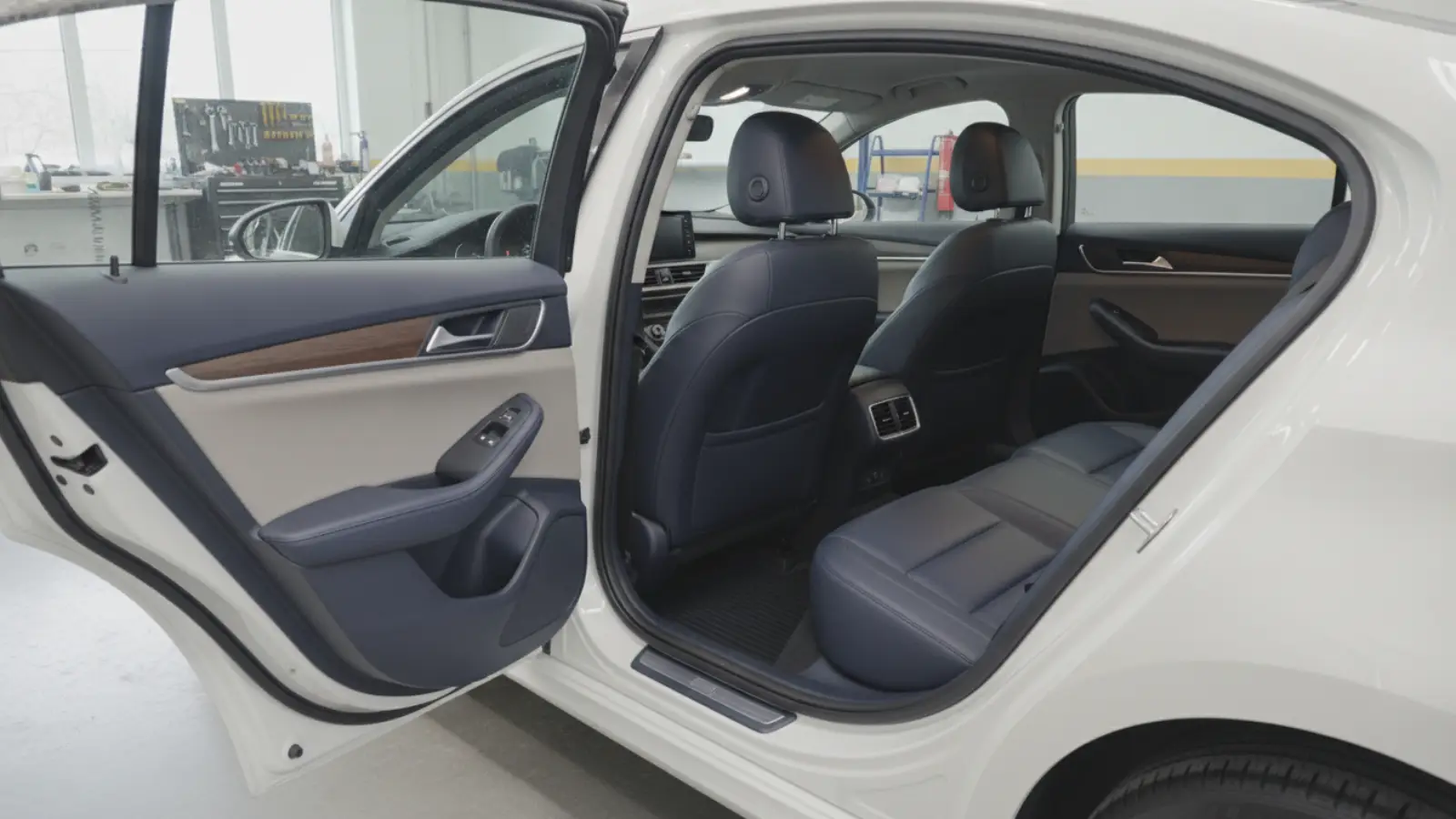
Cars are worse than rooms for one reason: almost everything in them is porous or hollow, and the volumes are small and enclosed.
- Seat foam absorbs and cannot be reliably disinfected. Upholstery frequently comes out rather than being cleaned.
- Fluid runs to the lowest point, which is under the carpet, into the sound-deadening mat and then into seams in the floor pan.
- Seat rails, belt mechanisms and the gaps between trim panels hold material a valet will never reach.
- Ventilation carries odor into the cabin filter and the ducting behind the dashboard.
- Trunk floors and spare tire wells are routinely missed and are routinely where it ended up.
A valet is not this. Shampooing a carpet that has fluid in the mat beneath it produces a car that smells clean for two weeks.
Insurance, and the honest position on write-offs
Comprehensive motor policies sometimes cover this and sometimes do not, and it is worth asking your insurer before committing to anything. Where the contamination is extensive, the cost of doing it properly can approach or exceed what the vehicle is worth — and if that is the case, you should be told so rather than sold the work.
For an older vehicle in particular, the right advice is sometimes that it is not worth remediating. We would rather say that than take the job.
If it is a family member's car
There is no hurry. The vehicle can sit, closed, until decisions are made — though heat accelerates everything, so somewhere shaded and out of the sun is worth arranging.
You do not have to look inside it, and you do not have to be the one who deals with it. Both of those are things people assume are required of them and neither is.
The work itself: Unattended death cleanup.