
In a house, the problem is contained by the building. In an apartment building it is not, and that changes the work, the timing and the conversations you have to have.
Odor does not respect the lease line
The most common way a death in an apartment is discovered is that a neighbor reports a smell. By the time that happens, the odor has already been traveling for a while — and it travels by routes the floor plan does not show.
- Shared extract ventilation, which connects bathrooms and kitchens across several units.
- The gap between a suspended ceiling and the floor above it.
- Service voids carrying pipework and cabling vertically through the building.
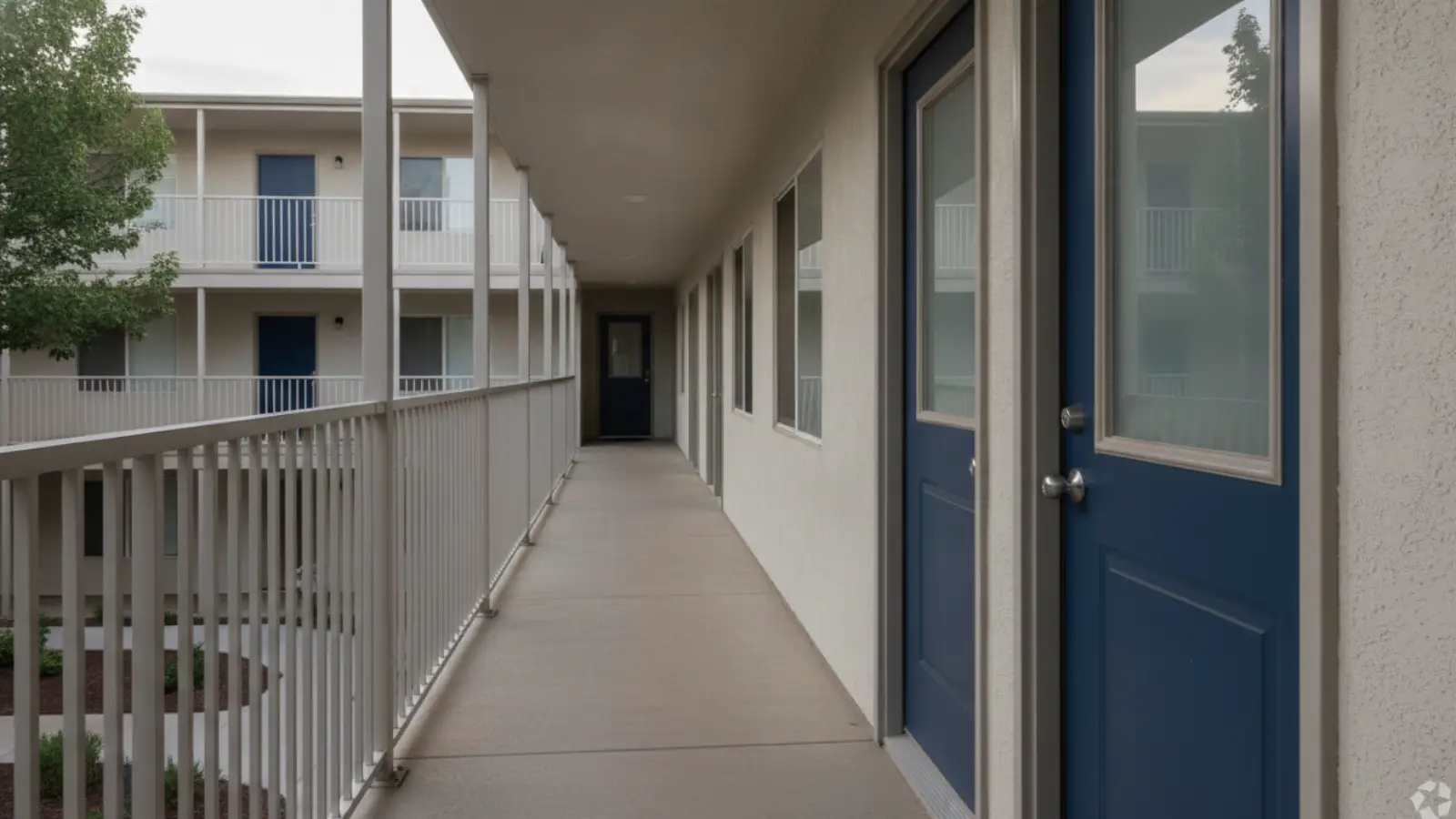
- Common corridors, whenever the door is opened.
This is why treating the affected apartment alone sometimes does not resolve a complaint two doors away. If neighbors are still reporting a smell after the unit is finished, the source is usually somewhere shared, and that has to be found rather than waited out.
Downwards is the expensive direction
Where fluid reaches the floor structure, the ceiling of the apartment below becomes part of the job. That means access to a second property, a second resident's cooperation, and a second set of arrangements — often with someone who has no idea why anyone is knocking.
It is worth checking early rather than late. A stain appearing on a downstairs ceiling a week after the upstairs apartment was signed off is a far worse conversation than an inspection on day one.
Common areas
A stairwell, elevator or corridor used to remove the deceased or to bring equipment in may need attention too. It is nobody's apartment, so it is nobody's job by default — which is exactly how it gets missed.
If you manage the building, name it explicitly in the scope. If you are a resident, ask who is responsible for it, because the answer is often that no one has been asked.
What to tell the other residents
Something, early, and less than people expect.
- Confirm that professional remediation is happening. Residents mostly want to know it is being handled properly, not what happened.
- Give a timeframe for any disruption. Corridor access, ventilation being isolated, work out of hours.
- Do not share the cause or the person's details. It is not yours to share, the family may not have been told yet, and it will circulate the building within the hour.
- Answer the health question directly. People will assume the air in the building is dangerous. Tell them what is actually being done rather than telling them not to worry.
Timing, where everyone sees everything
Out-of-hours work is worth more here than anywhere else. In a house, discretion means an unmarked van. In a block, it means residents not queuing past a cordoned corridor on their way to work.
Early morning or evening attendance can usually be arranged, and in a shared building it is the default worth asking for rather than a favor.
If you are the neighbor who reported it
You are allowed to ask what is being done, and you are allowed to ask whether your own apartment needs checking — particularly if you share ventilation or live directly below.
You are not entitled to know what happened to the person, and you will probably be told very little. That is not the building being evasive with you; it is the same discretion that would apply if it had been your apartment.
The work itself: Unattended death cleanup.