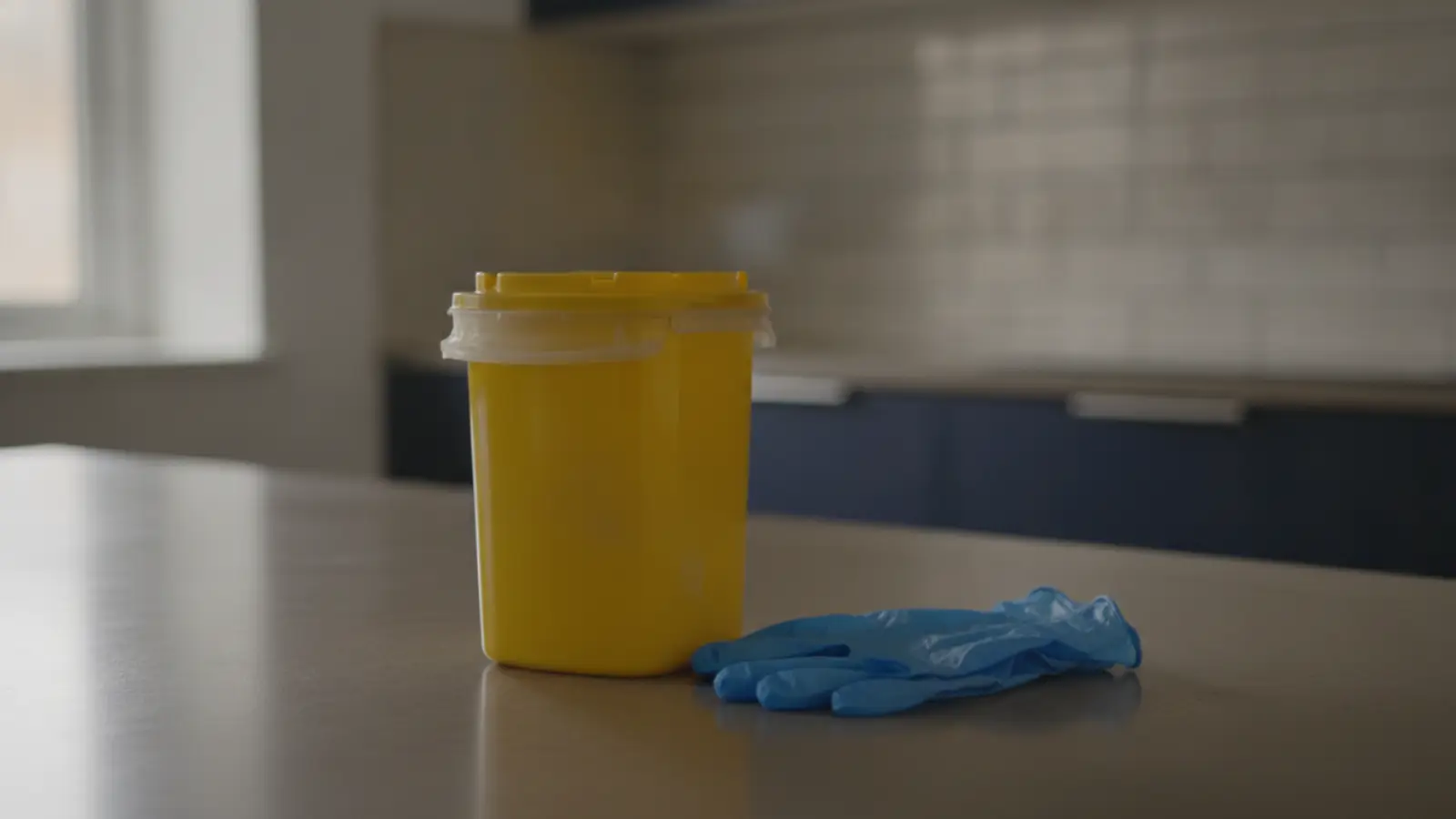

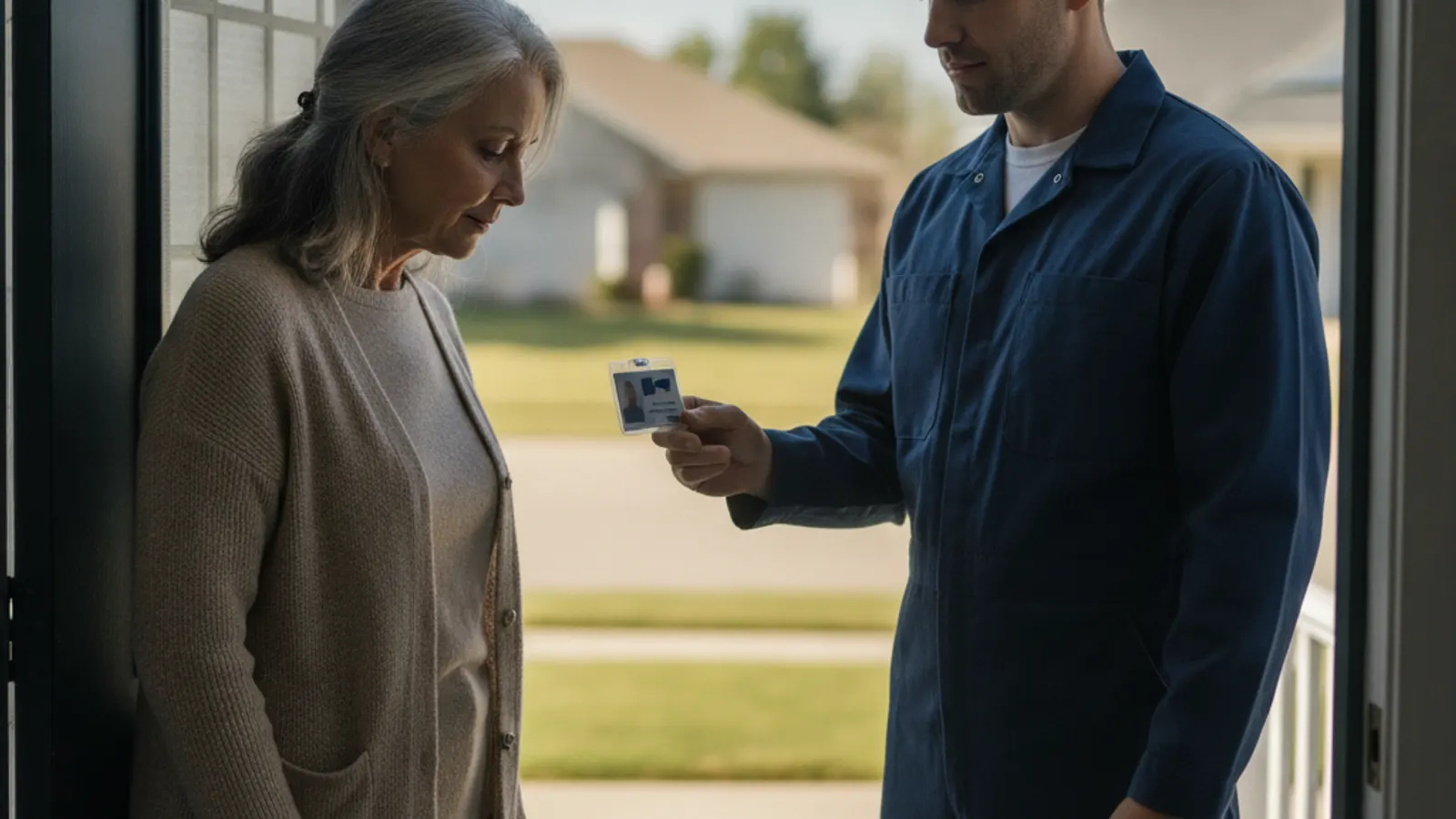
You are about to let a stranger into the worst room of your life, and you have no way of knowing whether they are qualified.
Most advice on this question is useless. It tells you to ask whether a company is “certified” or “trained,” which sounds reassuring and means almost nothing — anyone can print a certificate. In Georgia you can do something better than ask. The state keeps a register, and a company that is not on it is breaking the law by taking your call.
The short answer
Georgia law requires anyone who cleans up a trauma scene for money to be registered with the Secretary of State. Registration is not a formality: it requires an FBI fingerprint background check, a minimum level of liability insurance, a surety bond, and a state waste permit. You can check whether a company holds it before you hire them, and you should.
What Georgia law actually says
Most states have no rule specific to this work at all, which is why so much of the advice you will find online is vague. Georgia is different. Under O.C.G.A. § 43-46A-5(b), no person may perform, offer to perform, or engage in the cleanup of a trauma scene, or remove regulated biomedical waste from one, unless they are registered under that chapter or work for someone who is.
Read that phrase again: perform or offer to perform. An unregistered company is breaking the law at the moment it quotes you, before anyone touches anything. The penalty under § 43-46A-5(c) is a civil fine of up to $5,000 and action by the Secretary of State, up to revoking the registration of a company that has one.
There is a second provision that matters more to your wallet. Since January 1, 2021, § 43-46A-6 has made it against public policy for an unregistered operator to try to recover the cost of trauma scene cleanup from a property owner. An unregistered company that cleans your home and hands you an invoice is on very poor ground trying to collect it — and if you are hoping to put that invoice through an insurance claim, you now have a bill the law says should not have been issued.
What a company had to do to get registered
This is the part that makes the register worth checking, because the requirements are not trivial. Under the Secretary of State's rules for trauma scene waste management practitioners, a registered company has had to:
- Pass a fingerprint background check. Each owner submits fingerprints for a Georgia Crime Information Center and FBI criminal history check. This is the requirement that matters most in a business whose whole premise is that you let strangers into an empty house.
- Carry liability insurance. At least $100,000 per occurrence.
- Post a surety bond. $25,000, which exists so there is something to recover against if the work goes wrong.
- Hold a state waste permit. A permit from Georgia's Environmental Protection Division to generate and transport the waste. Biohazard material cannot lawfully go out with the household trash, and this is the paperwork that governs where it actually ends up.
None of that guarantees good work — no register does. What it tells you is that the company is a real, traceable, accountable business that has been checked by the state and has assets a wronged customer could reach. That is a meaningfully different thing from a van and a website.
How to check a company, in three steps
- Ask for the registration number. A registered company will have it to hand and will not be irritated that you asked. Georgia issues these in the form TSWM-CO followed by digits for a company. Vagueness here is your answer.
- Look it up yourself. The Georgia Secretary of State runs a public licensee search at goals.sos.ga.gov, covering every profession it regulates. Search the company name or the registration number, then confirm three things: the record exists, the status is active, and the expiry date has not passed.
- Check the name matches. The registration should be in the name of the business that is going to invoice you. A registration held by a different entity, or by an individual when a company is billing you, is worth a question.
If a company cannot or will not give you a number, you have learned what you needed to know without any expertise at all.
Words that sound official and are not
Three things come up constantly in this industry, and none of them is the registration:
- “Certified.” Trade bodies issue certifications, and some are genuinely useful — they indicate training in a method. But they are issued by private organizations, not the state, and no certificate substitutes for the registration Georgia requires.
- “City licensed” or “county licensed.” For this trade in Georgia, that phrase describes something that cannot exist. O.C.G.A. § 43-46A-2(a) states that no county or municipal government is authorized to require licenses, registrations, or permits for trauma scene waste management practitioners in this state. Registration is with the Secretary of State, and only there.
- “Bonded and insured.” Fine as far as it goes, but it is a claim about a private arrangement that you cannot verify by hearing it. The registration is the thing you can check.
What the law does not cover
Two limits are worth knowing, because a company that overstates them is telling you something about itself.
The first is what counts as a trauma scene. O.C.G.A. § 43-46A-1 defines it as a site contaminated as the result of a homicide, a suicide, or a death with advanced decomposition — and it expressly excludes the scene of a motor vehicle accident. Work outside that definition is not what the registration governs.
The second matters to families directly: the rules do not apply to a person cleaning property they own themselves, and they do not apply to family, friends, or neighbors helping without charge and outside a commercial enterprise. If you choose to do this yourself, Georgia does not stand in your way. There are good reasons not to, but the law is not one of them, and any company that tells you otherwise is not being straight with you.
Our registration
Novel Bio Recovery is registered with the Georgia Secretary of State as a Trauma Scene Waste Management Practitioner (Company), License No. TSWM-CO000067. It is active and expires on June 8, 2029. Ask us for it on the phone and we will read it to you; look it up before you call and you will find it.
We would rather you checked. A family that has verified who we are before we arrive is a family that has one less thing to worry about while we work.
The other questions worth asking
Once registration is confirmed, the questions that actually separate companies are practical ones:
- Who is coming? Employees or subcontractors, and have the people entering your home been background checked.
- Where does the waste go? A registered company can tell you how it is transported and where it is disposed of.
- What is in writing? A written scope and estimate before the work starts, and documentation afterwards that an insurer will accept.
- Will you bill my insurer directly? Most families should not be paying out of pocket and then chasing reimbursement during a bereavement.
And one answer that should end the conversation: if a company offers to waive or cover your insurance deductible, walk away. That is insurance fraud, and a company willing to commit it on the phone is telling you what its paperwork will look like.
This article is general information, not legal advice. Statutes and rules change — confirm the current text with the Georgia Secretary of State or an attorney before relying on it.
The work itself: Biohazard cleanup.