
The smell is often the first thing you notice, and the hardest to forget.
If you have walked into a home after an unattended death, you already know the odor is unlike anything else. It settles into everything and does not lift when you open a window. There is a reason for that, and it is not a failure of effort or cleaning. It is chemistry and biology at work — and ordinary household products were never built to reverse it.
What you are actually smelling
When someone dies, the body's own bacteria begin to break down tissue. That process, called putrefaction, releases gases. Two of the molecules behind the familiar odor are putrescine and cadaverine, formed as proteins come apart.
They are only part of it. In one six-month study of human decomposition, researchers identified 452 different airborne compounds. That is why the smell is so complex, so penetrating, and so hard to cover up. You are not smelling one thing — you are smelling hundreds.
Why it spreads through the whole house
The odor does not stay where the body was found. Decomposition releases fluids, and porous materials — carpet, padding, drywall, subflooring, upholstery — absorb them well below the surface. Blood and fluids that soak into flooring or walls become a breeding ground for bacteria, which keeps the smell alive long after the surface looks clean.
Once the odor reaches the heating and cooling system, the ductwork can carry it into rooms far from the original scene. This is why a deep surface clean so often fails. By the time the smell has spread, the source is no longer on any surface you can wipe.
Why candles, bleach, and ozone machines don't fix it
Air fresheners, scented candles, and sprays cover the smell for a few hours. They do nothing to the source, so the odor always comes back.
Ozone machines are sold as a stronger answer, and this is where it becomes dangerous. The U.S. Environmental Protection Agency has found that at levels safe to breathe, ozone does little to remove odor — and that an odor may be masked by the smell of ozone but is not actually removed by it. At the concentrations that would work, ozone is a toxic gas that can damage the lungs, causing chest pain, coughing, and shortness of breath. The EPA states plainly that no federal agency has approved these devices for use in occupied spaces.
There is one exception, and it is the reason you may still hear restoration companies mention ozone. The same EPA guidance notes that high concentrations of ozone are sometimes used to decontaminate an unoccupied space — with the condition that conditions are controlled so that no person or pet is exposed. That is a sealed, empty room, ventilated before anyone goes back in. It is not a machine running in a house where people are living, and it is never the step that actually removes the odor. Taking the contaminated material out is.
Bleach has the same limitation as every surface cleaner. It treats what you can see, while the source has already soaked into what you cannot.
Is the smell itself dangerous?
Here is the honest answer: the odor itself is usually a warning sign, not a poison in the air you breathe. What matters is what the smell points to.
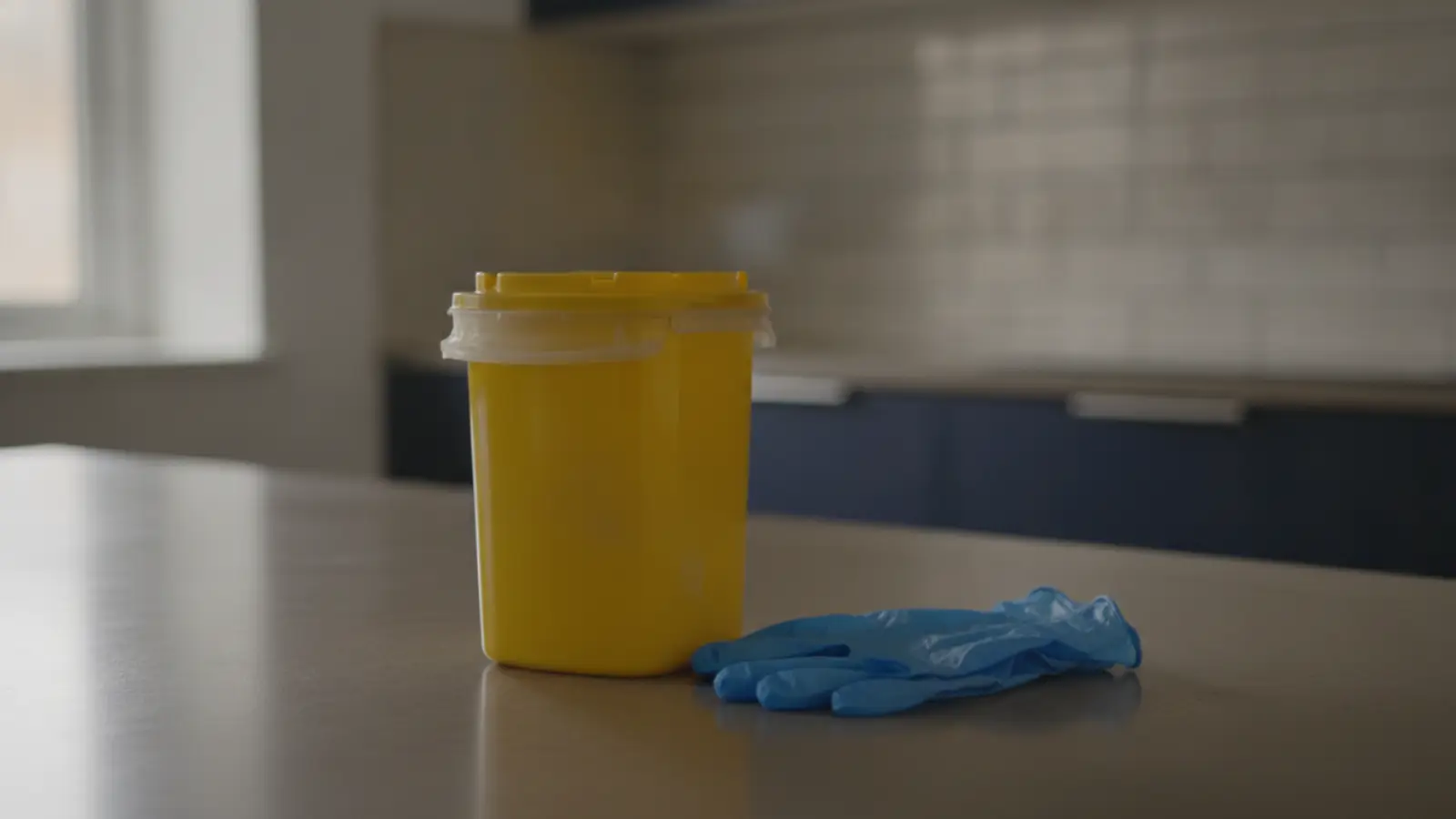
The real hazards are two. First, decomposition fluids can carry bloodborne pathogens — OSHA lists HIV, hepatitis B, and hepatitis C among them — which is why the materials they have soaked into must be treated as biohazard, not ordinary trash. Second, decomposition produces gases such as hydrogen sulfide, which can build to harmful levels in an enclosed, poorly ventilated space. The smell matters less for what it is than for what it tells you is present.
What actually removes it
There is a published industry standard for this work — the ANSI/IICRC S540 standard for trauma and crime scene cleanup — and every reputable company follows the same first principle: remove the source before you treat the air. In practice, that means five things:
- Removing contaminated materials. Carpet, padding, drywall, and subflooring that fluids have reached are taken out, because they cannot be cleaned in place.
- Cleaning and disinfecting. Enzyme-based cleaners break down the organic matter left behind instead of masking it.
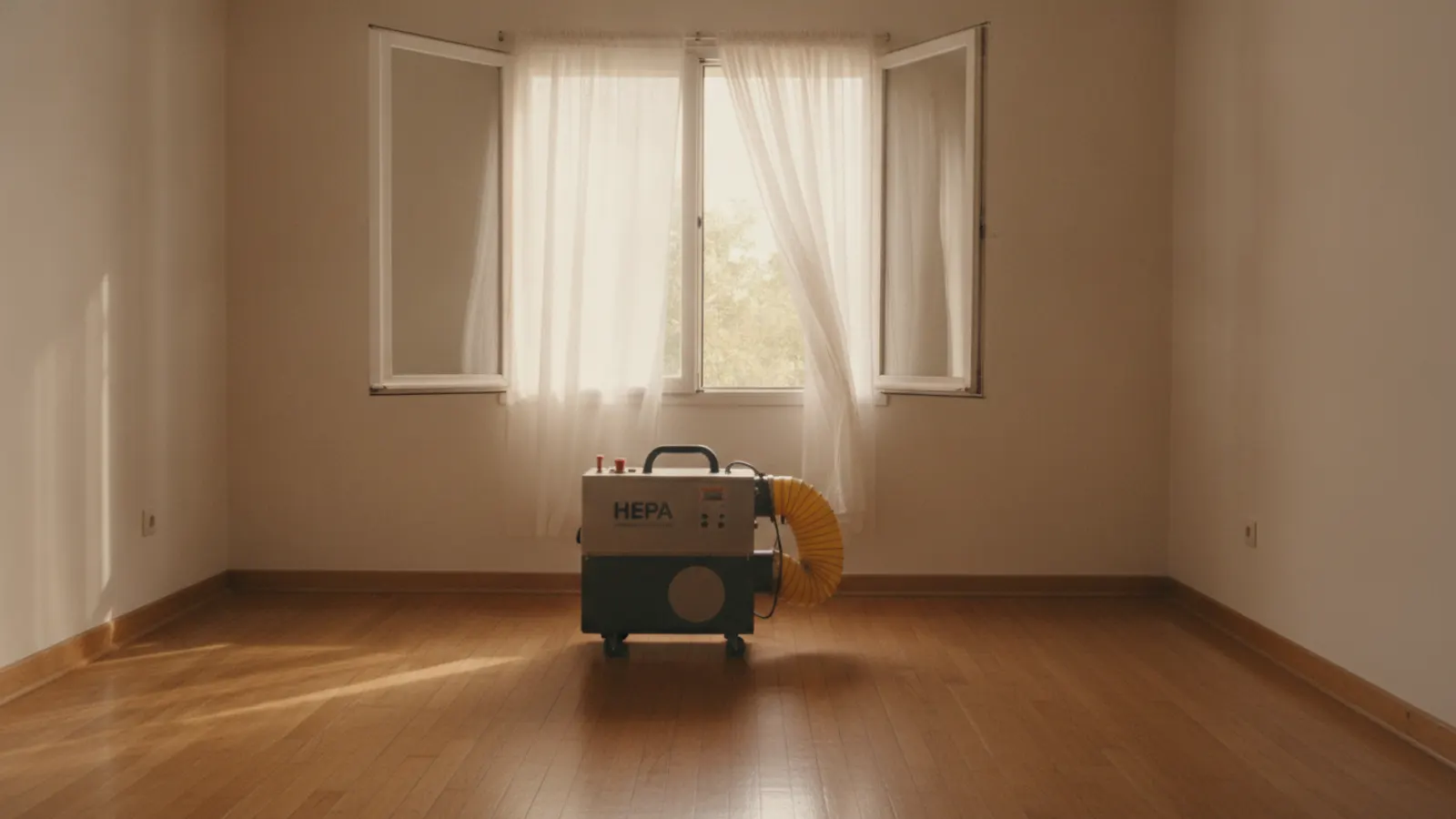
- Treating the air. Professional equipment such as hydroxyl generators breaks apart odor molecules. Unlike ozone, hydroxyl generators are safe to run in occupied spaces and handle a broader range of odors.
- Filtering the air. Scrubbers with HEPA and activated-carbon filters capture both the fine particles and the compounds that carry the smell.
- Sealing what remains. Once the source is gone, structural surfaces such as the subfloor and framing are sealed to lock in any last trace.
You should not have to live with it
You should not have to live with the smell.
And you should not have to be the one to remove it.
The odor after a death is not a housekeeping problem. It is a biohazard problem — and it has a real, proven solution when the work is done in the right order, by people trained and equipped for it.
If you are dealing with this right now, you do not have to figure it out alone. Call Novel Bio Recovery for a discreet assessment. We handle the removal and the restoration, and we answer every hour of every day.
The work itself: Odor remediation.