
Yes. In Georgia, you are allowed to clean your own property, and nobody can tell you otherwise.
You will find a lot of pages implying the opposite, usually written by companies that would like to be hired. So let us deal with the legal question first and honestly, and then talk about what actually goes wrong — because the reasons not to do this are real, and they are not the ones you are being told.
What Georgia law actually says
Georgia regulates trauma scene cleanup as a trade. But the Secretary of State's rules explicitly do not apply to the cleanup of property owned by a person by that person, and they do not apply to gratuitous cleanup by individuals who are not acting as part of a commercial enterprise. In plain terms: your own home is your own business, and family, friends, or neighbors helping you without payment are outside the rules too.
Where the law becomes strict is the moment money changes hands. No one may perform, or even offer to perform, trauma scene cleanup commercially in Georgia unless they are registered — with a civil fine of up to $5,000 for doing it anyway. So the legal risk in this situation is not you cleaning your own house. It is hiring the cheap unregistered outfit that offers to do it for cash.
The OSHA question, answered the right way round
You may have read that OSHA rules make this illegal for you. They do not, and the truth is more useful than the myth.
OSHA's Bloodborne Pathogens standard covers occupational exposure, which the regulation defines by reference to the performance of an employee's duties. OSHA has said as much directly: its authority runs to employers and employees. You cleaning your own home are neither, so the standard does not reach you.
Now turn that around, because this is the part worth understanding. When a company is hired, OSHA has confirmed the standard applies to the cleanup work done by its employees. That means the crew must have training, an exposure control plan, protective equipment, medical follow-up if something goes wrong, and regulated disposal — a whole apparatus the law considers the minimum for doing this work safely.
You are not banned from the work. You are simply outside every protection built for the people who do it professionally. That is the real answer, and it is the one nobody tells you.
What is actually in front of you
Two things about blood and body fluids are worth knowing precisely, because they are different.
- Hepatitis B is the durable one. The CDC reports that hepatitis B virus remains infectious on environmental surfaces for at least seven days. A dried stain is not a safe stain.
- HIV behaves differently. The CDC states that HIV does not survive long outside the human body and cannot reproduce outside a human host. It is a serious virus and a poor environmental one.
Most pages on this subject blur those two together into a general fog of danger. They are not the same risk, and knowing which is which is more useful than being frightened in general.
For disinfection, OSHA points to EPA-registered tuberculocidal disinfectants, or household bleach at 5.25% sodium hypochlorite diluted between 1:10 and 1:100 with water. That is a real, checkable specification — and worth noting, because most household cleaners under the sink do not meet it.
Why it usually goes wrong anyway
None of the above is the reason most families who start this end up calling someone. These are:
- You cannot see the extent of it. Fluid follows the path of least resistance — into carpet backing and pad, through seams in the subfloor, along joists, into wall cavities and sometimes ductwork. A surface can be spotless above material that is not. This is the single most common reason a DIY cleanup fails: it succeeds visually and fails underneath.
- Cleaning the surface can drive it deeper. Wetting and scrubbing an area moves liquid down into porous material rather than out of it.
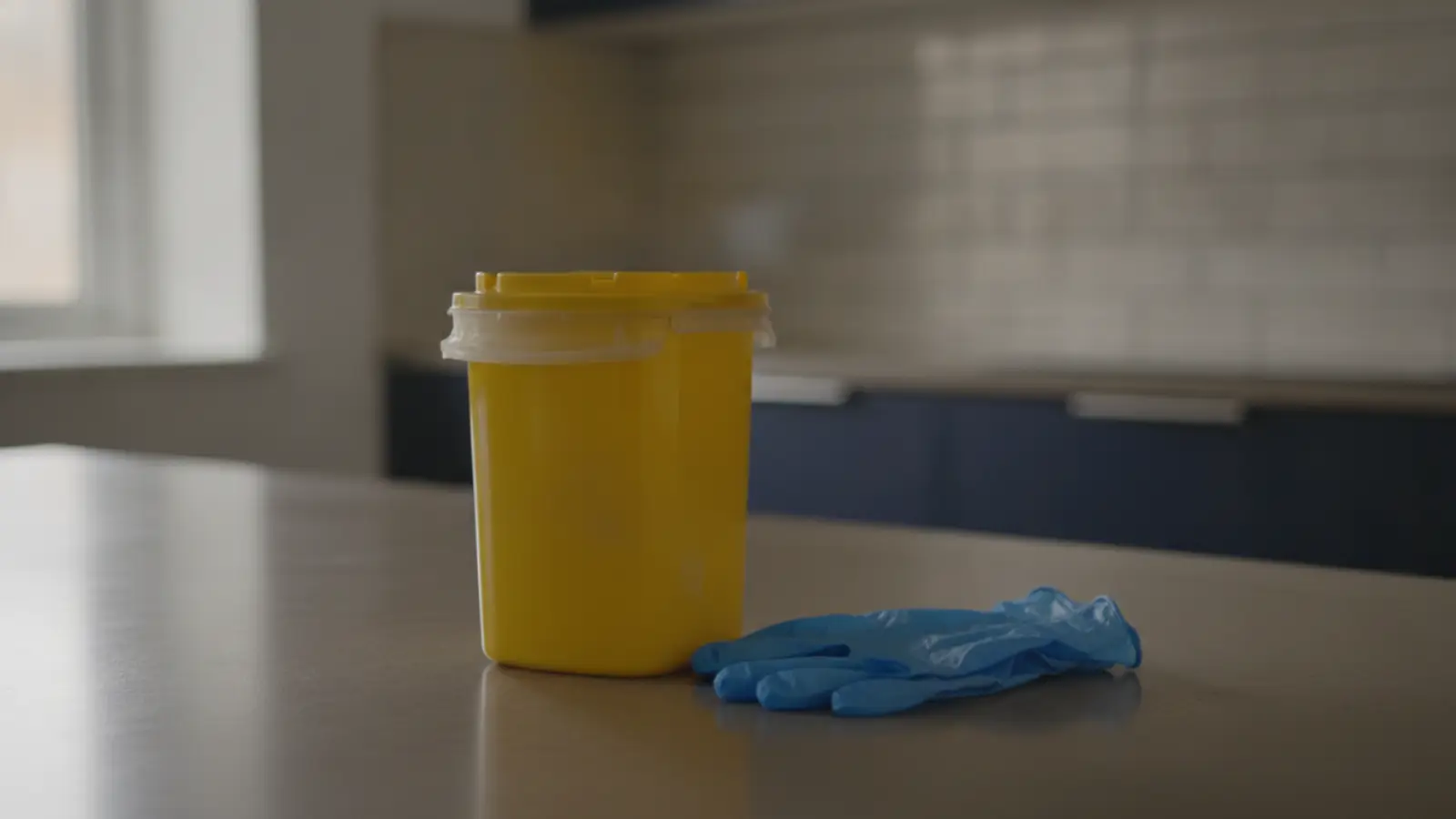
- The waste is regulated. Biohazard material cannot lawfully go out with the household trash in Georgia. That leaves you with material you cannot legally dispose of the ordinary way.
- The smell tells the truth later. Odor that returns after a few days is the usual sign that the source was never fully removed — and by then there is more material involved than at the start.
- And the one that matters most. People who begin this in a room they know very often cannot finish it. That is not fragility; it is an ordinary human response to an extraordinary situation, and it is worth planning around rather than discovering halfway through.
If you are going to do it anyway
Some people will, and would rather have straight information than a sales pitch. So:
- Do not do it alone. Both for safety and for the reason above.
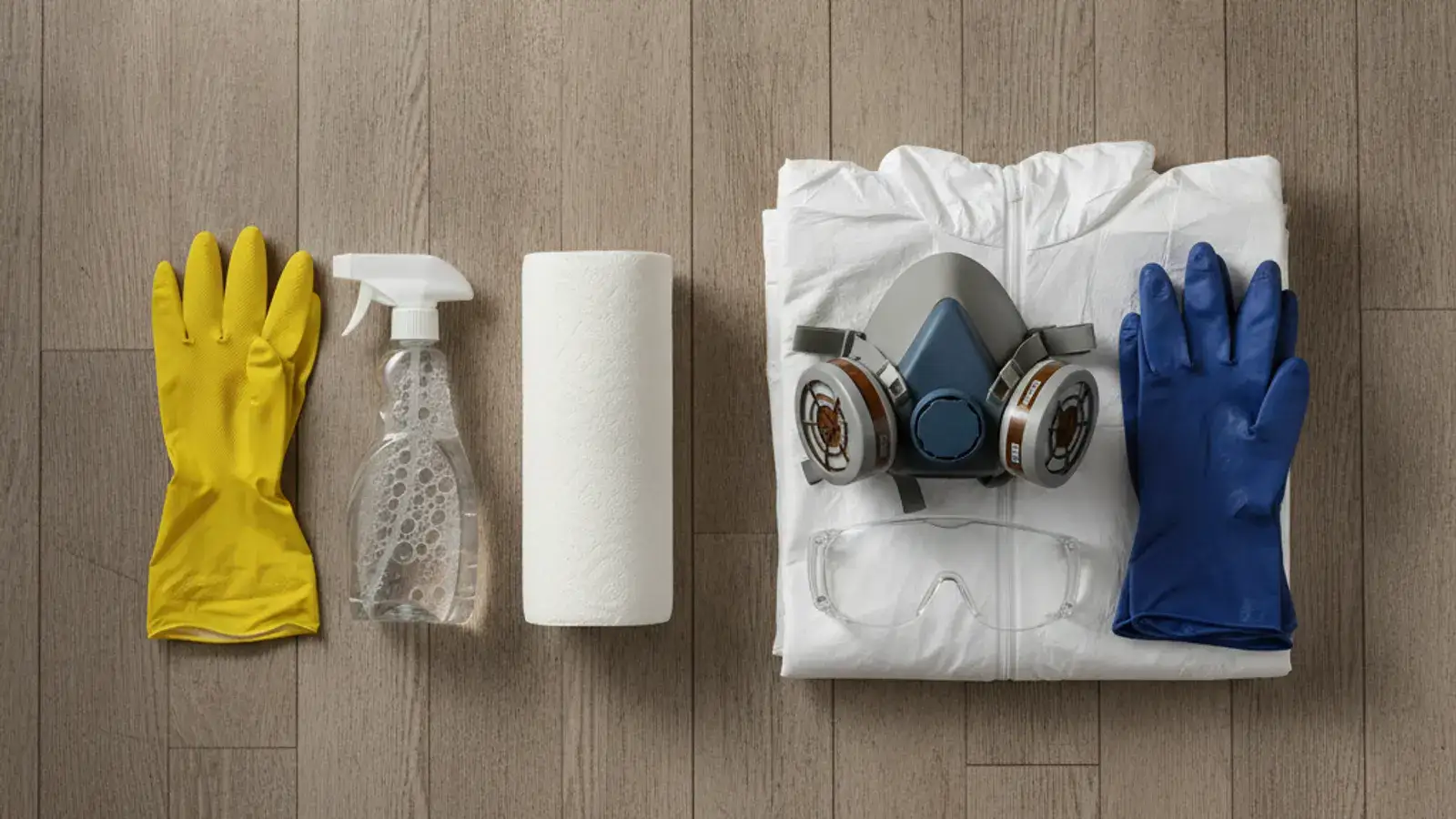
- Cover everything. Gloves that cannot be punctured easily, eye protection, a respirator rather than a dust mask, and clothing you will throw away.
- Ventilate to the outside, not through the house. Do not run the central air conditioning; it moves contamination into ductwork that was clean before.
- Assume porous means gone. Carpet, pad, mattresses, upholstered furniture, and drywall that has absorbed fluid are removed, not cleaned. Anything you decide to keep, you are deciding to keep permanently.
- Do not mix bleach with other cleaners. Combining bleach with ammonia or acidic products produces toxic gas. This is a common and serious household accident.
- Stop if you are cut or splashed. Wash the area and call your doctor. If you have inhaled fumes or swallowed anything, the Poison Help line is 1-800-222-1222, and it is staffed around the clock.
We are not going to tell you what medical steps to take after an exposure. That is a conversation with a clinician who knows your history, not something to read on a cleanup company's website.
If you decide to hire instead
The one check worth doing is the registration. Anyone doing this commercially in Georgia must be registered with the Secretary of State, and an unregistered operator is barred from recovering the cost from the property owner. Ask for the number before anything else.
And if you call us to ask what you are looking at with no intention of hiring anyone, we will still tell you. Plenty of situations genuinely do not need a company, and we would rather say so than sell you something you do not need.
If you or someone you love is in immediate danger, call 911. If you are in the U.S. and need emotional support, call or text 988 or use the 988 Lifeline chat. The 988 Lifeline provides free, confidential support 24/7/365.
This article is general information, not legal or medical advice. Regulations change and individual circumstances differ — confirm details with the relevant agency, or with a clinician for anything concerning your health, before relying on them.
The work itself: Biohazard cleanup.