

If someone has died at your premises, you are being asked to run two things at once: look after people who have just witnessed something terrible, and meet obligations you have probably never had to meet before. This is the order they come in.
It is written for the owner or manager. If you are here because a family member died at work, our other posts are written for you and this one will read coldly.
Hour one: people, then the scene
- Emergency services first, always, before anything else on this page.
- Move everyone else away from the area and keep them away. That includes staff who want to help.
- Nobody cleans anything. Not a spill, not a floor, not a piece of equipment.
- Identify who witnessed it. They will need looking after later, and somebody should know who they are.
- Stop the work. A shift that keeps running around a scene is a second incident waiting to happen.
The reporting duty most employers do not know about
A work-related death must be reported to the federal workplace safety regulator within eight hours. That clock starts when you learn of it, not when it is convenient, and it runs regardless of who was at fault or whether the person was your employee.
It is a short phone call or an online report. The consequence of missing it is a separate problem from the incident itself, and it is entirely avoidable.
Why you must not clean yet
Where the regulator investigates, the scene must be left undisturbed until they have finished with it. Cleaning early can destroy the evidence that establishes what happened, and can be read as an attempt to do exactly that.
This is why a cleanup company promising to be there within the hour is selling you something you are not allowed to accept. The useful question is not how fast someone arrives — it is how quickly the space can be back in operation once you are permitted to touch it. Book the assessment, agree the plan, and have the crew ready for the moment release comes.
Do not put your own people on it
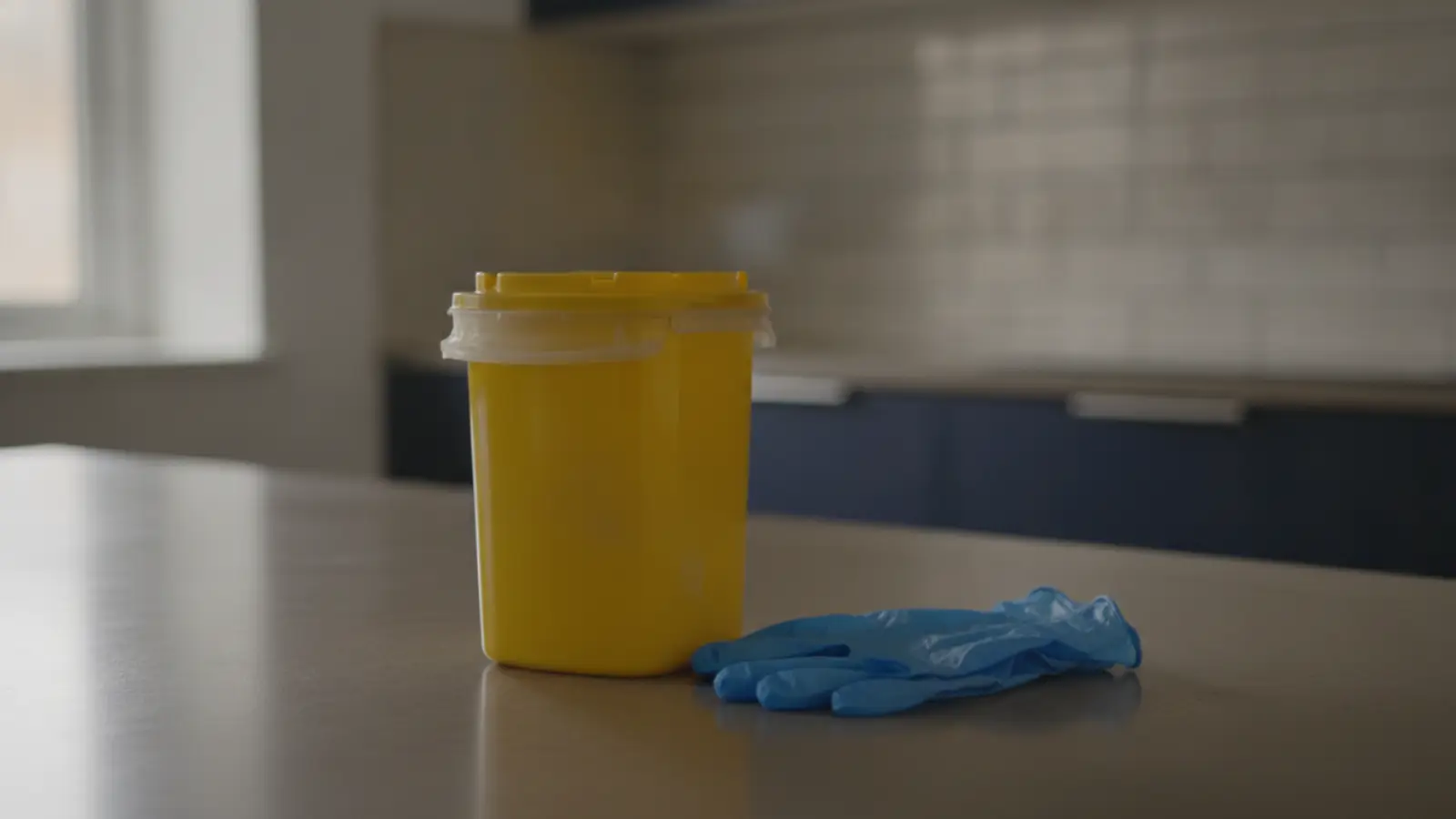
This is the single most common and most expensive mistake. Federal rules cover any employer whose employees can reasonably be anticipated to contact blood as part of their duties, and that scope explicitly includes cleaning up and disposing of the waste from an incident.
Asking a maintenance worker, a cleaner or a supervisor to handle it pulls the business into a written safety plan covering that risk, training, protective equipment, hepatitis B vaccination and record-keeping. Most businesses that do this have none of those things in place, which is how a difficult day becomes a compliance problem. It is covered properly in our separate post on why you should never ask staff to clean up blood.
What to tell people, and when
- Say something the same day. Silence is filled with worse than the truth.
- Say what happened in plain terms, say what is being done, and say when you will next update them.
- Do not name a cause before anyone knows it. A correction later costs more than the wait.
- Tell them the area is being professionally decontaminated and when they can expect it back. People worry about walking into it far more than managers expect.
- Offer whatever support you actually have, and do not offer what you do not.
Before you reopen the space
Get a written record of what was removed, what was decontaminated, and where the regulated waste went. You will want it for three separate audiences: your insurer, anyone who asks whether the area is safe, and — if it ever comes to it — an investigator.
It is also the thing that lets you tell your staff the space has been professionally remediated rather than cleaned, which is a different sentence and they will hear the difference.
A note on what is regulated and what is not
In Georgia, a homicide, a suicide or a death with advanced decomposition is a trauma scene in law, and only a practitioner registered with the Secretary of State may do that work. A workplace death from an accident or a medical event is not automatically within that definition — the work still has to be done properly and the waste is still regulated, but the trauma registration is not the credential that governs it. Any company telling you its state license covers everything it does is overstating what that license is.
The work itself: Biohazard cleanup.