

Almost no one plans for this expense, and almost everyone worries about it.
After a death or a violent crime at home, families are often blindsided by a practical question in the middle of their grief: who is going to pay to make this space safe again? The good news is that in most cases you are not on your own, and you are rarely paying the full cost yourself. Here is how it usually works, and what to do if you do not have insurance.
The short answer
For most families, homeowners or renters insurance covers trauma and biohazard cleanup, and the family pays only their deductible. When there is no insurance, there are still options — a state program for victims of violent crime, the deceased person's estate, or a payment plan. The right path depends on what happened and whose property it was.
When there is insurance
Standard homeowners policies generally cover damage from sudden, accidental, or criminal events, and biohazard cleanup after such an event is usually treated as part of that covered loss. In practice, the cleanup is billed to the claim, and most families are responsible only for their deductible — the amount you pay before coverage begins.
There are limits. Insurance is built for unexpected losses, not for damage that develops from neglect or lack of maintenance, and policies generally exclude harm the policyholder caused intentionally. Coverage and exclusions vary from one policy to the next, so the surest step is to ask your insurer — or better, let your cleanup company work directly with the adjuster, which is standard practice in this industry.
Renters insurance works differently. It covers your belongings and your living expenses if you are displaced, but the building itself — the floors, walls, and subfloor where biohazard cleanup happens — is generally the landlord's responsibility under their own policy.
If the death was a violent crime: Georgia's victim compensation
Georgia runs a Crime Victims Compensation Program, administered by the Criminal Justice Coordinating Council, that can help pay for cleanup after a violent crime. It lists crime scene sanitization as a covered expense, up to $1,500, within an overall program limit of $25,000 per victim.
The program has firm requirements. A few of the most important:
- The crime must be reported. It generally must be reported to law enforcement within 72 hours, unless there is good cause for a delay.
- There is a filing deadline. For crimes on or after July 1, 2014, an application generally must be filed within three years of the crime.
- It pays last. The program is the payer of last resort, meaning insurance and other sources are applied first, and its benefits are reduced by anything you receive elsewhere.
- It is for violent crime. The program serves victims of violent crimes — not property crimes, and not deaths from natural causes.
You can apply through the Council's victims' compensation portal or by mail. Because the rules are specific, it is worth contacting the program directly with your questions before you assume you do or do not qualify.
A natural death is different
This is a distinction that trips up many families. Victim compensation exists for victims of crime. A death from natural causes — even an unattended one that requires extensive cleanup — is not a crime, so it does not qualify for that program. In those cases the path runs through homeowners insurance, the person's estate, or private payment instead.
When there is no insurance and no crime
If the property is not insured and the death was not a crime, the cost falls to whoever is responsible for the property, which is usually the owner. When the person who died owned the home, the estate generally handles the expense as part of settling their affairs — a surviving spouse, family member, or executor works with the insurer and pays covered costs through the estate.
Rentals are less settled. Once investigators release the scene, arranging cleanup typically falls to the landlord or property manager; emergency responders do not do it. Whether a landlord can then recover that cost from a tenant's estate or security deposit is a legal question that depends on the lease and on state law, and it is not clearly settled in Georgia. If you are a landlord or a family member facing that question, it is worth a conversation with an attorney.
Whatever the situation, a good cleanup company will not walk away from a family that has no easy way to pay. We provide written estimates up front and payment plans for larger jobs, and we will tell you honestly which of these paths is likely open to you.
How we make it easier
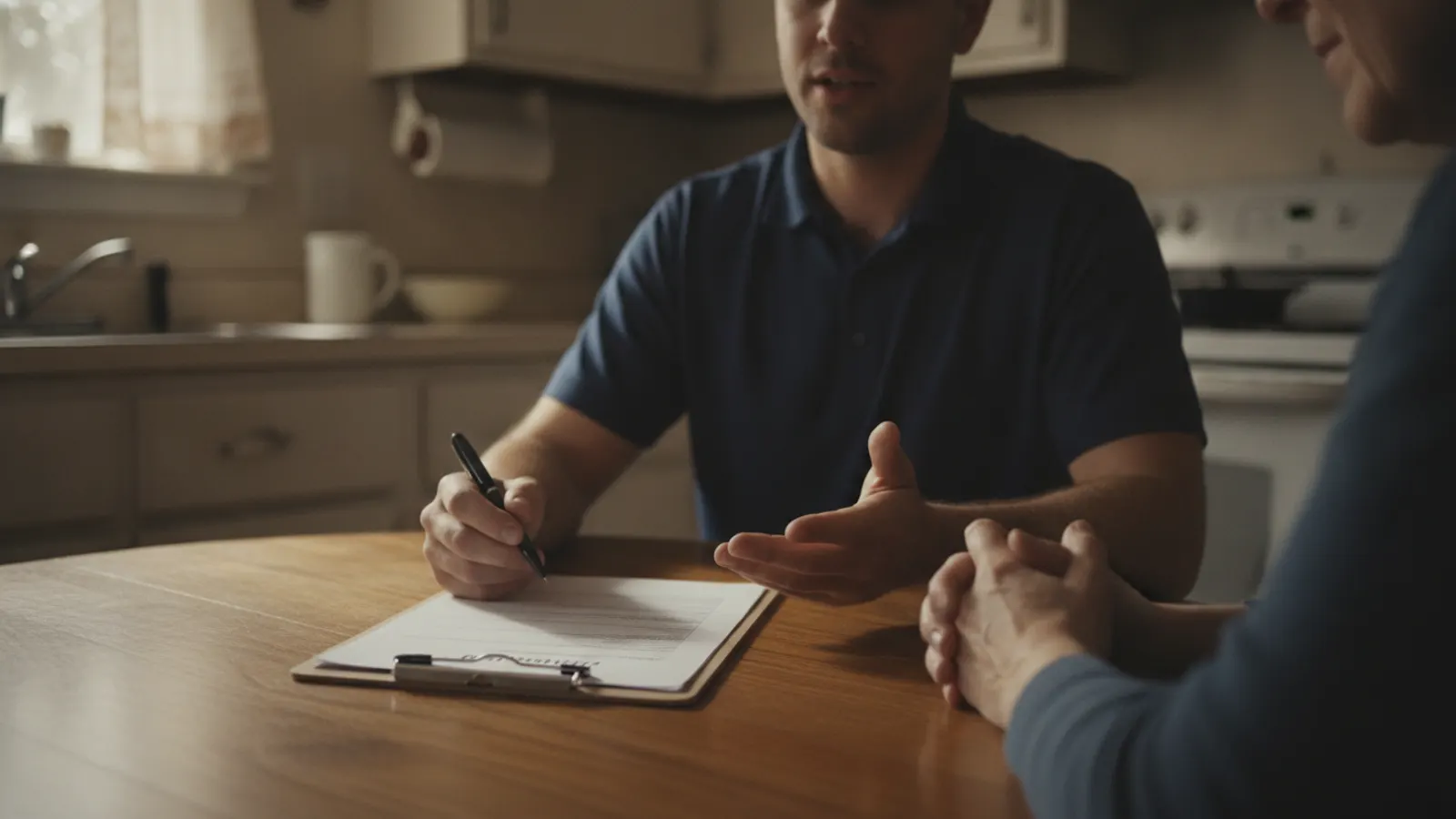
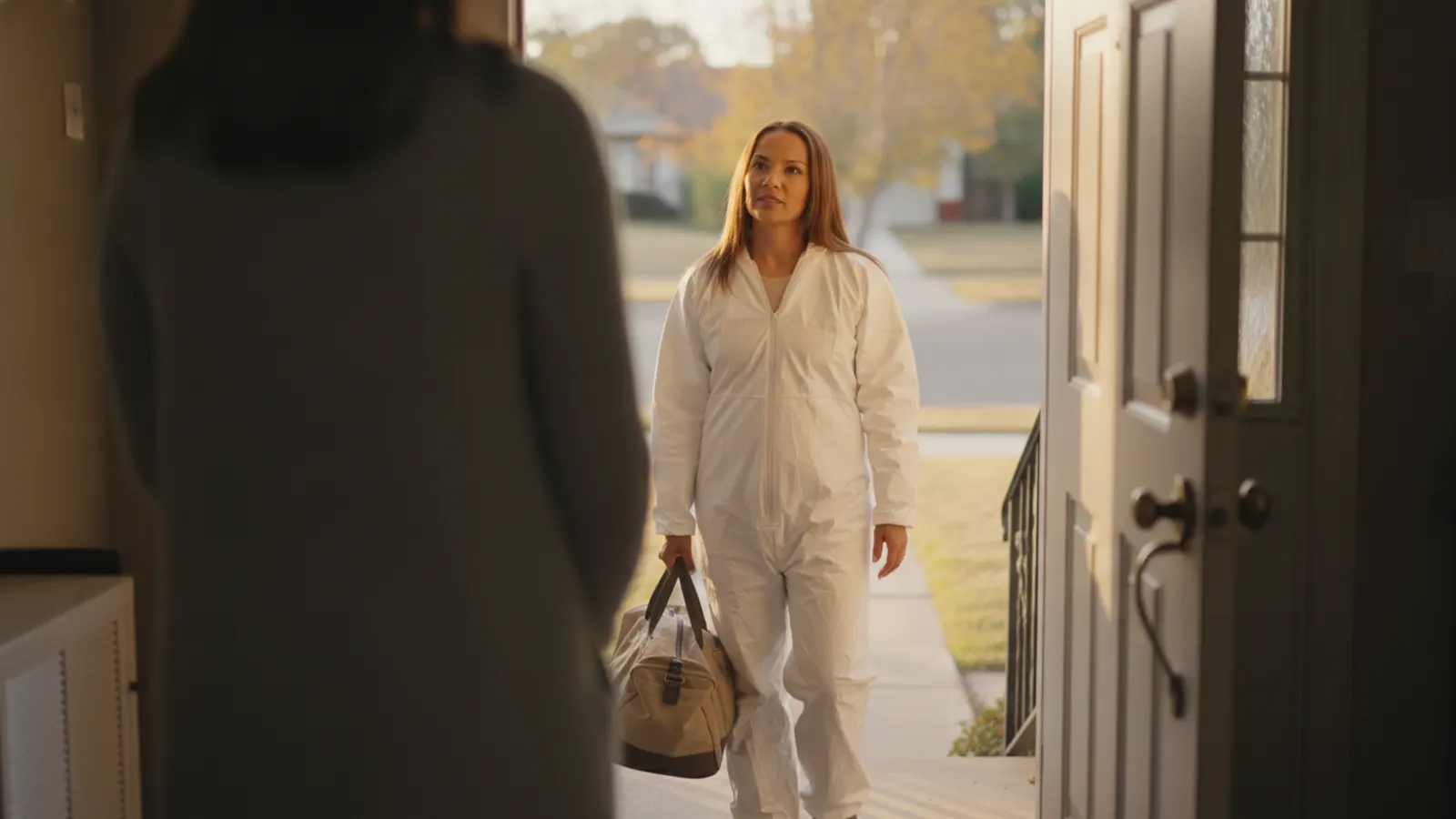
You should not have to become an insurance expert on the worst week of your life. When you call us, we document the work, provide what your adjuster asks for, and record every phase of the job for the file. In most covered cases, that leaves you responsible only for your deductible.
One thing we will never do is offer to waive that deductible. That is insurance fraud, and any company that offers it is a company to walk away from.
You are not alone in this
You did not choose this.
You do not have to face the cost of it alone.
If you are trying to figure out who pays for cleanup in your situation, call Novel Bio Recovery. We will walk you through your options — insurance, the estate, victim compensation, or a payment plan — and put a clear estimate in writing before any work begins. Someone answers every hour of every day.
This article is general information, not legal or insurance advice. Coverage, eligibility, and the law vary by policy and by case — confirm the details with your insurer, the compensation program, or an attorney before relying on them.
The work itself: Crime scene cleanup.